Why watch leaders now read resale prices as a brand health signal
With Audemars Piguet now running its own certified pre-owned programme, executives at Bulgari, Breitling and Chrono24 describe the secondary market in strikingly similar terms: as a measure of brand strength. The harder question is how maisons read that signal and who should be allowed to act on it.
On 26 October, Audemars Piguet launched The Watch Keepers, its certified pre-owned programme, almost a decade after first committing to the secondary market. Unlike Rolex, whose scheme runs through authorised retailers, the manufacture acts as an intermediary: sellers consign their watches and set a fixed price or opt for auction, while Audemars Piguet authenticates, grades and guarantees each piece.
Rolex, which announced its programme in December 2022, is on course for US$1 billion in certified pre-owned sales through its retailers in the coming year, according to WatchPro. More watch brands now want to run resale themselves.
For much of the past decade, watch brands treated the secondary market as something to tolerate, or at best to monitor at arm’s length. That posture is shifting. In the first three episodes of Season 4 of The Luxury Society Podcast, three leaders from very different businesses described resale in remarkably consistent terms: as a source of information about the brand itself. Jonathan Brinbaum, Managing Director of Bulgari Watches, an LVMH maison Jean-Marc Pontroué, CEO of Breitling, a privately held watch group. José Gaztelu, CEO of Chrono24, the online watch marketplace Their business models and interests differ considerably; that they converge on the same idea is itself telling.
The Watch Keepers by Audemars Piguet Credit: Audemars Piguet
Three views on one signal
José Gaztelu sees the market from the marketplace side. With close to 700,000 watches listed on Chrono24 by his count, he argues that secondary values now signal brand strength. He sees no ceiling on how far pre-owned can go.
Jean-Marc Pontroué took over Breitling in May 2026, as it moves to a House of Brands structure alongside Universal Genève and Gallet. He calls the secondary market a “precious indicator” of brand health. In his view, price has to be earned.
Jonathan Brinbaum, speaking at Geneva Watch Days, describes an industry where unit volumes are shrinking while export value holds up better. Among the levers he names for bringing the two back together is a disciplined reading of the secondary market.
The secondary market already returns very different verdicts on the brands at the centre of this debate. According to LuxuryIQ data for the third quarter of 2026, new, unworn Audemars Piguet watches were listed on the grey market at a median 46.1 per cent above retail, and Rolex at 35.7 per cent. Grey-market Breitling and Bulgari pieces sat just below list, at discounts of 6.9 and 3.6 per cent respectively.
In pre-owned condition, the spread widens. Rolex held a median premium of 20.7 per cent and Audemars Piguet of 2.4 per cent, while Breitling was offered 31.5 per cent below retail and Bulgari 40 per cent below.
Why the reading is the hard part
Agreeing that resale prices matter is the easy part. Using them is considerably harder, for three reasons we regularly see with brands.
The first is fragmentation. What a reference resells for, where it is authorised for sale and who is talking about it usually sits in three different systems, often owned by three different teams.
The second is visibility. The markets where the signal matters most are frequently the least transparent. China is the clearest example: resale transaction prices and the influence of creators on RedNote are where brands have historically had the thinnest view.
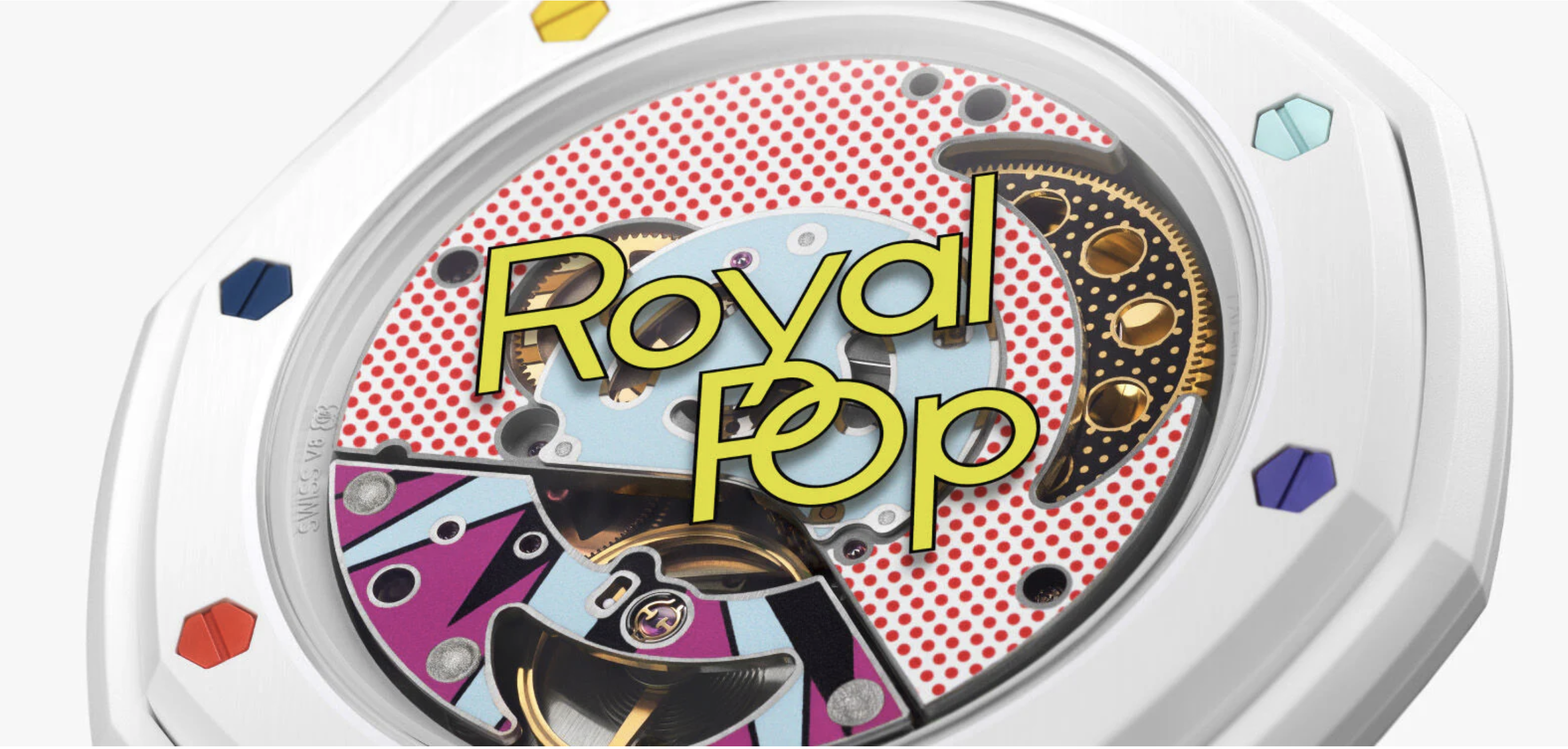
The third is interpretation:a resale price alone says little. A discount to retail can reflect overproduction, a distribution problem or simply a reference at the end of its life. It can also be an effect of pricing: a watch bought new before successive price increases may trade below today’s list price while still returning a profit to its seller. Audemars Piguet shows how much a brand-level figure can hide. In the same quarter, LuxuryIQ data show Royal Oak pieces listed at a median 65 per cent above retail on the grey market and 56 per cent above in pre-owned condition. The Royal Oak Offshore carried a 10 per cent grey-market premium but sat 15 per cent below retail pre-owned, while CODE 11.59 sat below list in both channels, by 4.5 and 33 per cent respectively.
A resale price becomes a brand health signal only when read next to distribution, demand and pricing history.
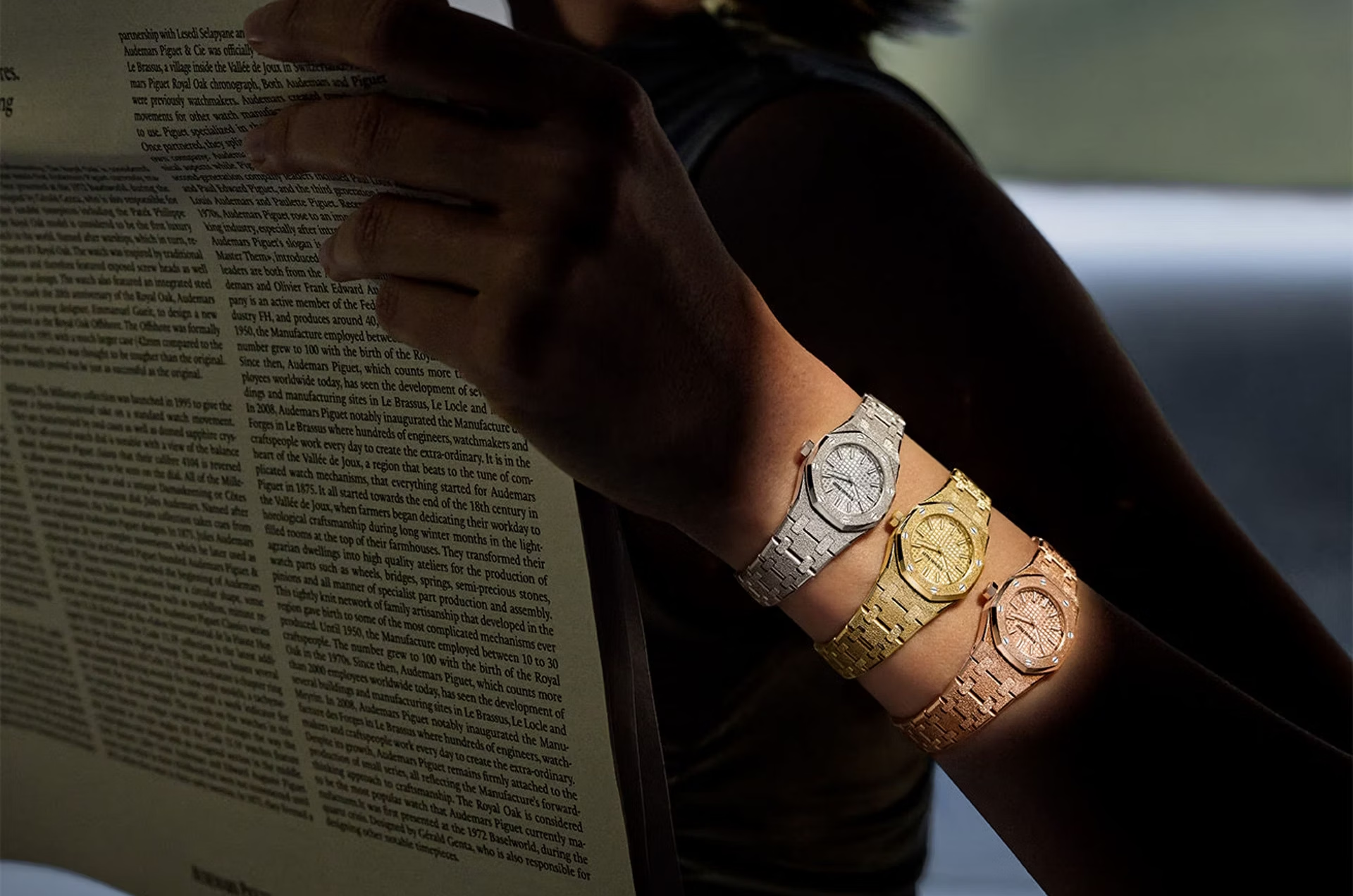
Audemars Piguet’s iconic Royal Oak Credit: Audemars Piguet
Reading price, place and influence together
Closing these gaps is largely a data problem, and it is the one LuxuryIQ, DLG’s luxury market intelligence platform, has set out to address. Alongside the brand and competitor signals it already tracks, the platform has added three datasets.
The first covers China resale: SKU-level monthly sales, revenue and the gap between retail and transaction prices, from China’s leading authenticated luxury resale platform. The second tracks authorised points of sale worldwide, taken from brands’ official store locators. The third monitors the activity of roughly 4,000 luxury creators on RedNote, segmented by tier, competitor exposure and brand alignment.
The aim is to put resale pricing, the physical retail network and the creators shaping consideration side by side. That way, a pricing or distribution decision can be checked against all three.
The governance question
If resale prices become a standard brand health indicator, the next question is governance. Who inside a maison owns that signal, and which decisions should it be allowed to influence: pricing, allocation, distribution?
Brand-run programmes make the question sharper. Rolex has framed its own scheme as a matter of protecting clients and trust, a rationale few would dispute. Audemars Piguet’s consignment model leaves price-setting with sellers and bidders, which preserves a degree of independent price discovery. Yet the manufacture now decides which watches are accepted, how they are graded and how they are presented, and every transaction carries its name. The more the secondary market is curated by brands, the less it can serve as an outside test of their pricing. How maisons reconcile those two roles may prove one of the defining strategic choices of the next cycle.
The newly released WeChat Luxury Index examines how high-end and luxury brands achieve marketing or business objectives on WeChat. The report also showcases a ranking of these brands, evaluating whether their offerings and services on WeChat are developed enough to meet the sophisticated demands of today’s consumers.
In an exclusive interview for The Luxury Society Podcast’s inaugural episode, TAG Heuer CEO Antoine Pin reveals how the brand’s historic return to Formula 1 aims to conquer new markets, seduce younger consumers, and win the ultimate battle: The one for our wrists.
A new survey of 451 Glion and Les Roches alumni finds that the hospitality-trained talent luxury houses court still aspires overwhelmingly to hotel groups. Their careers are international and senior, and their employers score well on prestige.
Modern luxury is increasingly negotiating a difficult balance between exclusivity and relevance. Collaborations like Swatch × Audemars Piguet reveal how brands are adapting to a more participation-driven luxury economy but they also raise uncomfortable questions about how much accessibility luxury can absorb before symbolic prestige begins to weaken.
Bain & Company’s new report notes early signs of recovery in mainland China’s luxury market, but growth is increasingly shaped by grey market cannibalisation and competition from local brands.