Bulgari’s Jonathan Brinbaum on Bringing Value and Volume Back Together in Swiss Watchmaking
At Geneva Watch Days, Bulgari’s watch managing director weighs a shrinking unit count against resilient export value, and sets out how creativity, women buyers and a disciplined reading of the secondary market could restore the balance.
Each September, Geneva Watch Days turns the city into a walking fair. The seventh edition, held from 2 to 6 September 2026, brought 71 brands to Geneva, according to the organisers. Bulgari helped found the event in 2020, when the large trade fairs could not take place, as an independent association built around collectors and end clients.
It was here that The Luxury Society Podcast recorded its first in-person episode. Co-hosts Robin Swithinbank and David Sadigh sat down with Jonathan Brinbaum, who moved from Bulgari’s fragrance division to lead its watch business two years ago and spent his first weeks in the manufactures, learning more than 45 different métiers.
The question at the centre of the conversation is one of arithmetic. Swiss watch exports were worth CHF 25.6 billion in 2025, 1.7% below 2024, yet the 14.6 million watches shipped were roughly half compared to a decade earlier, according to the Federation of the Swiss Watch Industry. Jean-Christophe Babin, President of Bulgari and President of Geneva Watch Days, had raised the stakes the day before, telling the fair’s press conference that volume is “the difference between success and bankruptcy”, as Swithinbank recalled on air.
Volume as an Industrial Responsibility
“Honestly, the challenge now is, how do we reconcile, how do we bring back together value and volume?” Brinbaum asks. On value, the category is holding its ground. According to Morgan Stanley watch report of 2025, renowned independents including Jacob & Co., F.P.Journe, Richard Mille, climbed up the rankings. Brinbaum observed this growing interest as well: “the rise of independent watchmakers and the interest of collectors into buying more complex and value-driven watches is great, and that’s wonderful for the craftsmanship.”
Volume is the harder problem. Since the demand have been cut by half over the past 15 to 20 years, and the damage lands first on suppliers rather than brands. “If a brand has issues in volumes the first consequence is gonna be the supplier,” he says, describing an industry whose brands and suppliers are tightly interlocked.
That interdependence is what makes the risk systemic. The suppliers behind houses like Bulgari, Audemars Piguet and Vacheron Constantin also serve the lower end of the market. “A lot of our suppliers, they are supplying on high-end watches, but they’re also the same suppliers supplying, I would say, 1,000 euro watches,” Brinbaum explains. “And that’s the risk, is that you could see a collapse of not only the brands but the supplier network.”
The Bvlgari Manifattura Jewellery Production Site Credit: Bulgari
His answer has three parts. The first is creativity: established brands “may have forgotten a bit to innovate here and there. That’s why independent brands rose.” The second is women, “an outstanding source of growth for watchmaking”, who often arrive through jewellery, the category Bain-Altagamma identifies as the clear winner of 2025, with estimated growth of 4% to 6% while new watch sales were broadly flat. The third is a younger generation that wears smartwatches day to day but would, in his words, “love to have a complicated watch on their wrist”. “This is what I call versatility,” he says.
A March to Versatility
For Brinbaum, genderless design is a generational shift rather than a trend, and this distinction determines how a brand should respond. “By definition, luxury is the opposite of trends,” he says. But what he sees here is more durable: “It’s becoming a generational shift.” That means staying true to the brand rather than chasing the label.“It’s not about launching a watch that will be genderless for the sake of launching a genderless watch,” he opines. “Because this generation, they may be looking at maybe different designs, but they’re very demanding on the authenticity of what they’re buying.” Where Bulgari’s existing codes can be explored in that direction, he adds, that is its duty.
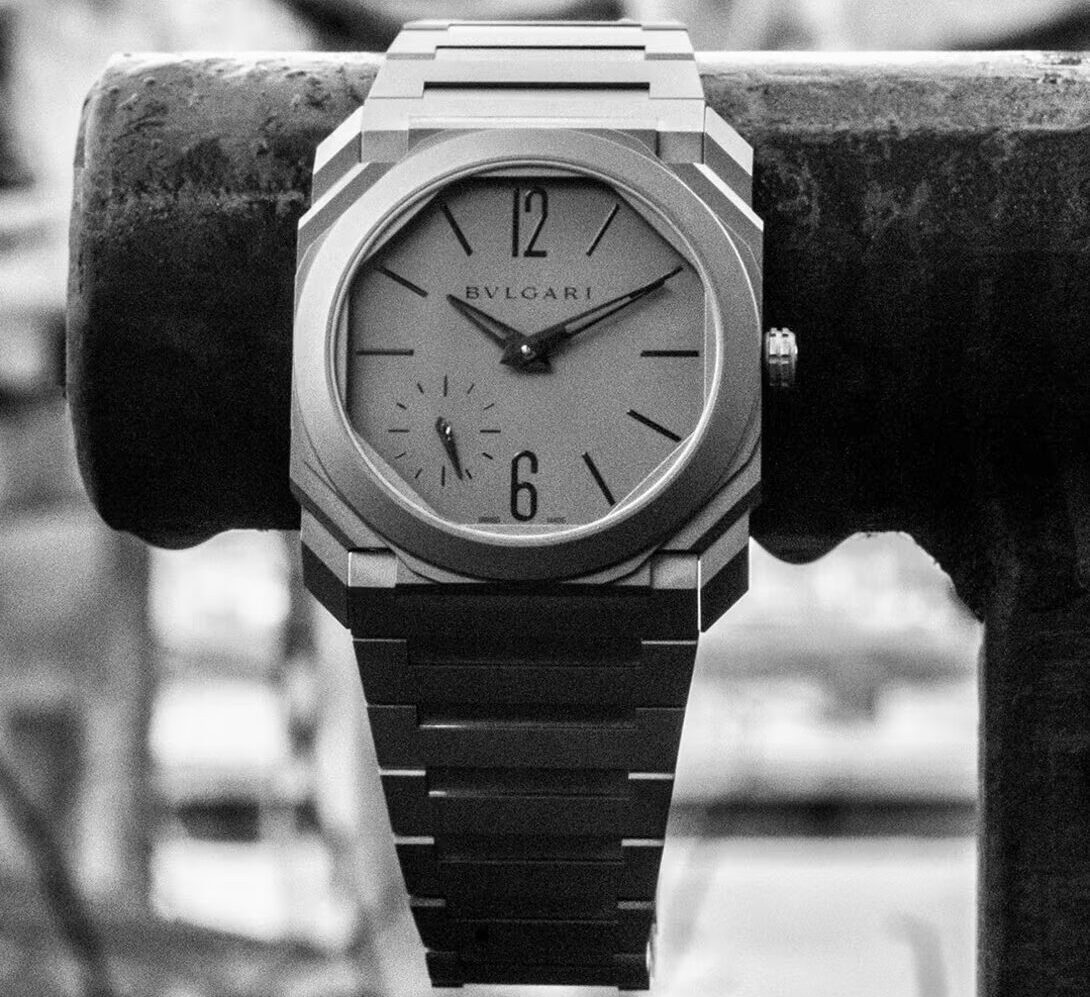
The Octo Finissimo provides the evidence. First introduced in 2014 at 40mm, the collection was presented in a 37mm case at Watches and Wonders Geneva 2026. “Funnily enough, we’re very happy because now we have one client out of three on Finissimo 37 who is a woman,” Brinbaum says. On the 40mm, the balance is reversed: “Nine clients out of ten of the 40 are men.” Three millimetres, without any explicitly feminine styling, has changed who buys the watch.
Octo Finissimo 37 Credit: Bulgari
He is equally clear that watches designed for women remain essential. “For years, women have been a bit disappointed by a lot of brands doing ladies’ watches, which were just the smaller replica, with diamonds, of a man’s watch,” he says. At Bulgari, Serpenti, conceived for women from the outset, is the answer.
Secondary Market: The Value Stress Test
The conversation turns to official certified pre-owned, a channel Rolex has scaled quickly: its programme generated an estimated $594 million in sales in 2025, more than 10% of the Rolex secondary market, according to EveryWatch data reported by WatchPro. For Brinbaum, the wider luxury secondary market, which Bain-Altagamma puts at around €50 billion, is a test of substance. “This CPO and secondary market, it is really a stress test for the true value of your watch,” he says. “It’s the key metric that I’m looking at.”
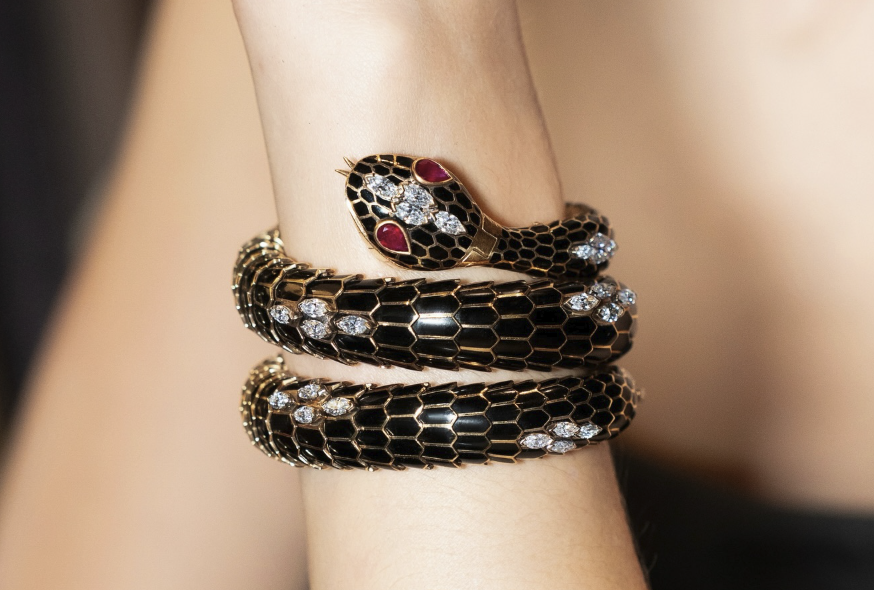
He reads it two ways. The quantitative measure is the resale discount against retail and the transaction volume that proves a watch’s liquidity. The qualitative measure is where it sells. “When you have a wonderful 1950s vintage Serpenti sold at Phillips, which is creating traction, it also brings value,” he explains, and that value feeds desire for the new pieces.
Vintage Serpenti watch Credit: salvati_official
Asked about the grey market, Brinbaum says there is “no secret recipe”: it comes down to partnership and joint business plans with wholesale partners, backed by monitoring of the secondary market and Chrono24. “Trust is good, control is better,” he says. Brands carry responsibility too. New dials and colours are “very often great for what we call the sell-in, but the main question is, how is it gonna be on the sell-out piece?” Sometimes, he argues, a brand should preserve its icons rather than reach for a new colour.
Pricing is the other lever. He calls recent rises explainable, given gold, the strong Swiss franc and the fixed costs that come with lower volumes, but says Bulgari has tried to stay “reasonbale”: the Finissimo has moved “from 13, 14K to 17, 18K” in 12 years, far less than many rivals. Clients who feel mistreated would put off a new generation of buyers. “The value for money is something that we need to respect.”
Subscribe to The Luxury Society Podcast to receive notifications about new episodes featuring luxury industry leaders. Never miss an episode as we continue exploring the themes shaping the future of luxury.
Yiki is Global Marketing and Communications Assistant Manager at DLG, based in Shanghai. She previously served beauty clients including Shiseido Group, Estée Lauder Group and L’Oréal Group. At DLG, she oversees marketing and communications for both global and China markets.
The newly released WeChat Luxury Index examines how high-end and luxury brands achieve marketing or business objectives on WeChat. The report also showcases a ranking of these brands, evaluating whether their offerings and services on WeChat are developed enough to meet the sophisticated demands of today’s consumers.
In an exclusive interview for The Luxury Society Podcast’s inaugural episode, TAG Heuer CEO Antoine Pin reveals how the brand’s historic return to Formula 1 aims to conquer new markets, seduce younger consumers, and win the ultimate battle: The one for our wrists.
At a Geneva Watch Days panel on generative engine optimisation and desirability, DLG’s Senior Advisor Antonio Carriero argued that artificial intelligence cannot originate desire, only mediate it. He explains why GEO should be treated as hygiene rather than strategy, and why the brands that win by 2030 will be both machine-legible and unmistakably human.
John Shmerler, chief executive of The 1916 Company, argues that Rolex’s Certified Pre-Owned programme has reset consumer trust in resale watches, and that the industry’s true blind spot remains what happens after the sale, not before it.
Cartier’s former chief executive, now chairman of culture and philanthropy, on why the past six years bear no resemblance to the sector’s previous downturns, and why some brands are mistaking a lasting cultural shift for a cycle waiting to turn.