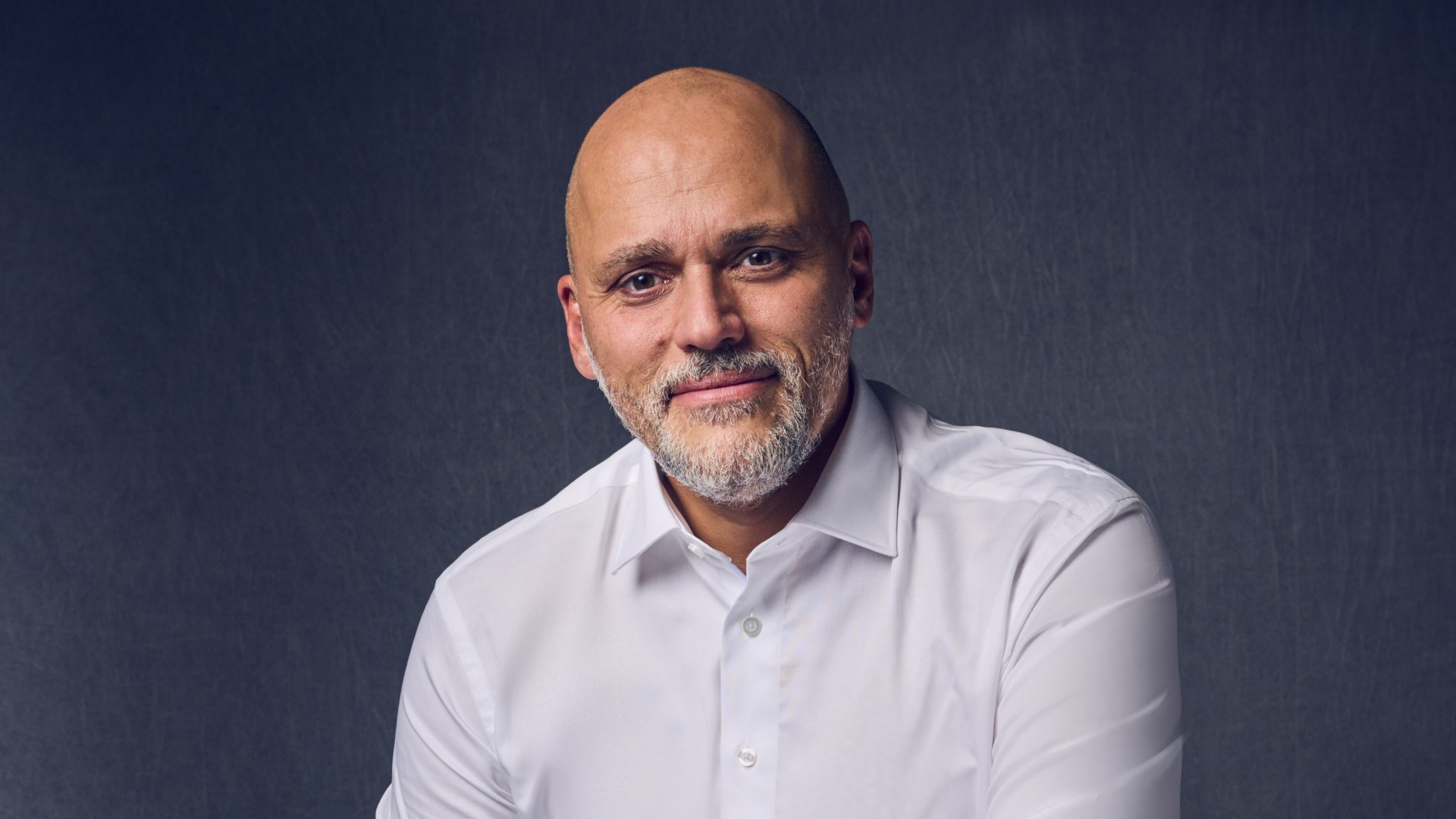
The Architect of Private Luxury: Guido Terreni on Parmigiani’s Relaunch and the Future of Independent Watchmaking
As Swiss watchmaking consolidates around a shrinking group of dominant names, the chief executive of Parmigiani Fleurier makes the case for a different kind of desirability — one built not on visibility, but on discernment.
Swiss watchmaking has rarely felt the pressure of its contradictions quite so acutely as it does today. The industry is simultaneously concentrating and diversifying, contracting in volume while expanding in value, consolidating around a handful of dominant names while a new wave of collectors goes looking for alternatives to the obvious.
Into this landscape steps Guido Terreni, one of the more analytically rigorous CEOs in the business, who sat down with Robin Swithinbank on a recent episode of The Luxury Society Podcast to discuss the relaunch of Parmigiani Fleurier, his philosophy of private luxury, and what he believes brands must do to endure beyond the current moment of turbulence.
Private Luxury as a Genuine Position, Not a Trend
Guido Terreni champions “Private Luxury” as the defining philosophy of Parmigiani Fleurier, a concept that speaks not only to the Maison’s design and craftsmanship, but also to the values and aspirations of the audience it seeks to serve. It is a distinction that, in the wrong mouth, might read as a branding exercise, but in his comes across as something more considered: the difference between quiet luxury as a passing aesthetic and private luxury as a durable value system.
The former, he suggests, has already been co-opted. The moment a brand begins to present its restraint, it is no longer restrained. “Quiet became a trend, and private luxury is not a trend. Private luxury has always been there and always will be there. So if quiet luxury today is a trend, you are picking up those values that are opposite to quiet luxury. So you don’t want to show that you’re quiet. If you’re showing you’re quiet, you’re not quiet.”
By his observation, his clients have moved past the need for social signalling altogether. The watch is made for its owner. The logo is taken off the dial. Desire is rooted in discernment, in craft, mechanical ingenuity and refined aesthetics, not in scarcity or hype.
This framing matters because it runs against the logic that has shaped the industry’s most visible success stories. According to the Morgan Stanley – LuxeConsult Swiss watch study for 2025, the four largest privately owned brands: Rolex, Patek Philippe, Audemars Piguet and Richard Mille, had captured a combined 51% of the market, up from 36.8% in 2019, a concentration that has continued to intensify in a wary climate. “Luxury should be about being interesting” Terreni addresses “That is part of how you address the pleasure of excellence and have a pleasure of enjoying sophistication and differentiating yourself”
The private luxury client, as he describes them, is someone who has passed the tipping point of seeking social recognition. They are characterised not by wealth but by what he calls a maturity of values: the capacity to buy for intrinsic pleasure rather than for the approval of others. This, Terreni is careful to note, is not an age-related quality. “You could be private at 20, at 15, depending on how you’re brought up,” he says. The lens through which every product and distribution decision at Parmigiani is made flows directly from this premise.
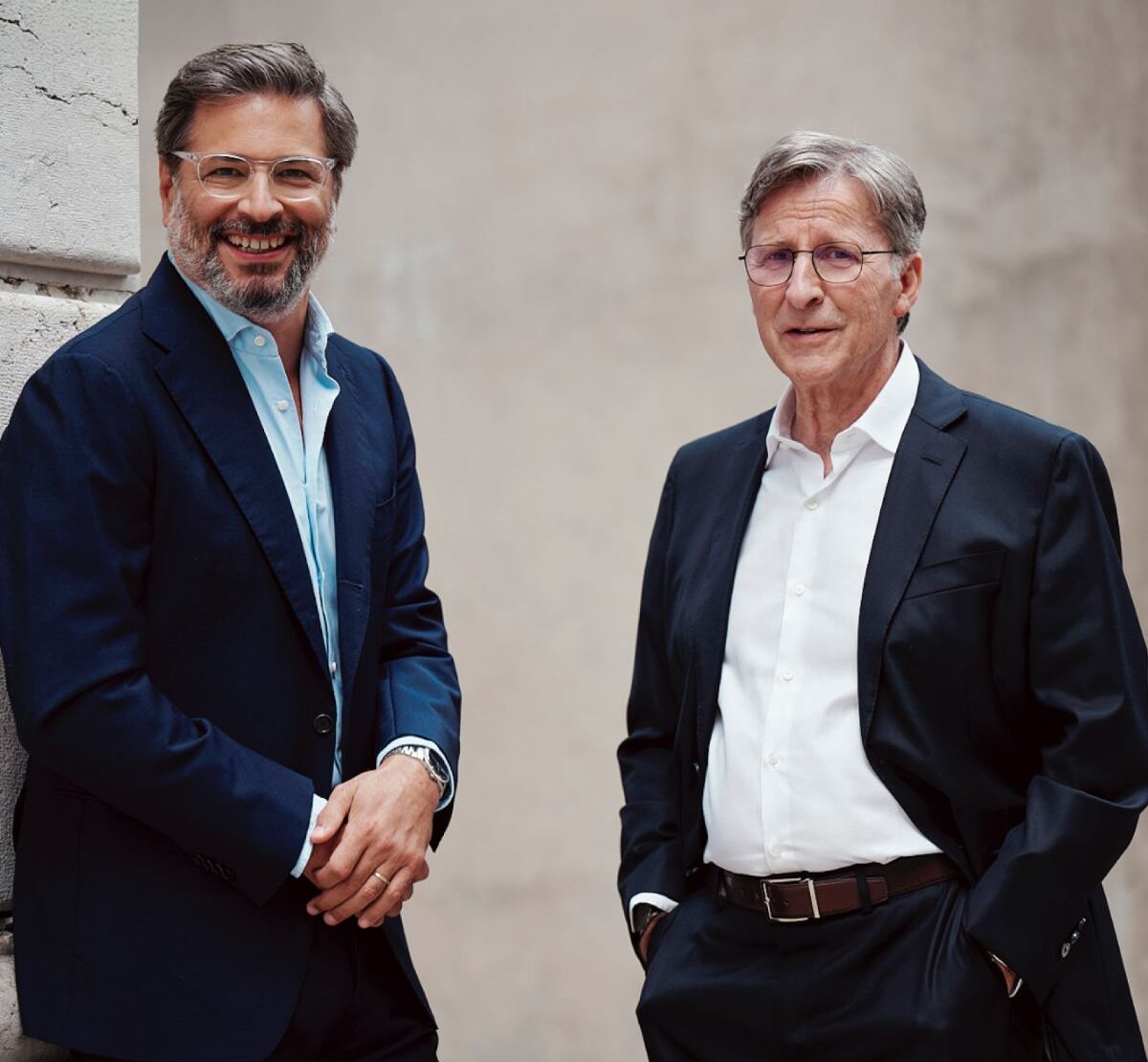
Guido Terreni and Michel Parmigiani Credit: Parmigiani Fleurier
The Relaunch: Speed, Discipline and the Tonda PF
The structural story of the turnaround at Parmigiani is, by the standards of the industry, unusually fast. Terreni arrived in 2021 into what he describes as a brand that had lost its way in the decade prior, not stripped of prestige, but disconnected from the clientele that prestige implied. The pandemic, paradoxically, provided cover for speed: fewer external demands, manufacturing capacity freed by the near-total halt to Swiss watch production, and the mental space for a thorough introspective exercise. “The pandemic helped us, paradoxically, because we were in a moment where you could work 24/7. That wasn’t enough to overcome the external factors that were affecting the business. So that was a perfect moment to be introspective.”
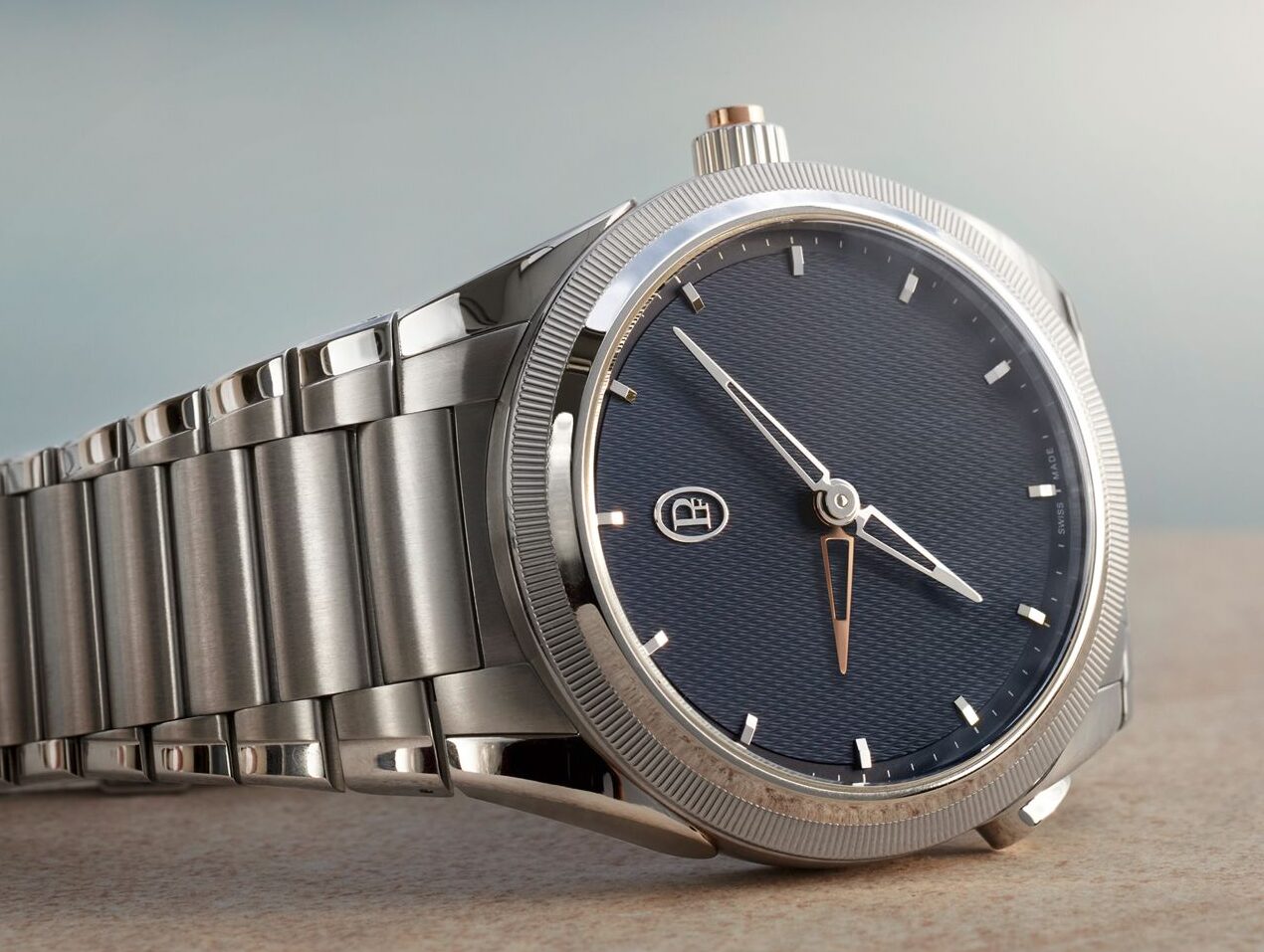
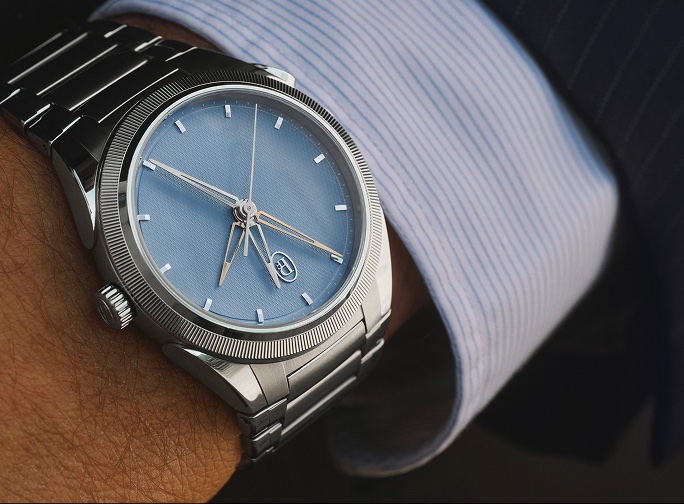
The outcome was the Tonda PF collection, seven references presented within seven months of Terreni’s appointment, a pace he readily acknowledges would be impossible to replicate today. The collection’s design philosophy was grounded in the brand’s own codes rather than competitive benchmarking: streamlined, pure in concept, and studded with deliberate signals of private luxury, the most immediate of which was the removal of the logo from the dial.
“You work on the aesthetic codes of the brand, but you use them as the seven notes in music. Those ingredients are in the brand, and we use them in a more fresh way.” Terreni says. “And everybody returned, ‘This is so new, but it’s so Parmigiani.’”The response from collectors and the press was immediate. The Tonda PF GMT Rattrapante, presented at Geneva Watch Days in 2022, attracted 1,000 deposits against an initial production of 140 movements.
The Tonda PF GMT Rattrapante in Milano Blue Credit: Parmigiani Fleurier
Distribution has also undergone an introspective overhaul with discipline. In 2022, Parmigiani cut two-thirds of its retail partners, retaining only those whose client profiles and operating standards aligned with the brand’s repositioned identity. Alongside this, a digital warranty application was introduced to allow the company to monitor dealer sell-out in real time and withhold supply where stock from previous seasons remained unsold, a discipline that Terreni identifies as a direct contributor to the improvement in secondary market values.
Iconicity and the Invisible Complications
The third thread in Terreni’s thinking concerns longevity of creative ideas. He is explicit that in watchmaking, a single watch is a watch, two is a couple, and three becomes a story. The invisible complications saga, of which the Mystérieux chronograph is the most recent chapter, is a deliberate narrative built on the chassis of the Tonda PF, each new complication reaffirming a philosophy of concealment and revelation. “Creativity has to breathe and has to have the time to penetrate and to be understood,” he says. “There’s a saying in Switzerland that I adore, which you cannot go faster than the music.” In his view, the function of a mechanical watch has never been about accuracy. It is about the kind of transformation that makes a person feel something, a watch that appears perfectly composed until the owner activates the chronograph, at which point a previously hidden mechanism springs visibly to life.
The Parmigiani Fleurier Tonda PF Mysteria Credit: Parmigiani Fleurier
Terreni closes with a thought that functions as both business philosophy and personal credo: nobody needs another watch, so if you launch one, have something to say. It is a deceptively simple discipline and one that has, across Bulgari and now Parmigiani, consistently proved its worth. As the Swiss watch industry enters what several reports describe as one of its most structurally complex periods, the case for clarity of identity over reactivity of strategy has rarely been made with more conviction.
Subscribe to The Luxury Society Podcast to receive notifications about new episodes featuring luxury industry leaders. Never miss an episode as we continue exploring the themes shaping the future of luxury.
Lydianne is a seasoned marketing and communications professional with over a decade of experience in the luxury industry. Having spent six years in Shanghai, she also has a deep understanding of China’s evolving luxury landscape. Currently Global Marketing & Communications Director at DLG, she previously led marketing efforts for DLG China. Before that, she honed her editorial expertise at Prestige in Singapore and later as China Editor of Luxury Society.
The newly released WeChat Luxury Index examines how high-end and luxury brands achieve marketing or business objectives on WeChat. The report also showcases a ranking of these brands, evaluating whether their offerings and services on WeChat are developed enough to meet the sophisticated demands of today’s consumers.
In an exclusive interview for The Luxury Society Podcast’s inaugural episode, TAG Heuer CEO Antoine Pin reveals how the brand’s historic return to Formula 1 aims to conquer new markets, seduce younger consumers, and win the ultimate battle: The one for our wrists.
At Geneva Watch Days, Bulgari’s watch managing director weighs a shrinking unit count against resilient export value, and sets out how creativity, women buyers and a disciplined reading of the secondary market could restore the balance.
At a Geneva Watch Days panel on generative engine optimisation and desirability, DLG’s Senior Advisor Antonio Carriero argued that artificial intelligence cannot originate desire, only mediate it. He explains why GEO should be treated as hygiene rather than strategy, and why the brands that win by 2030 will be both machine-legible and unmistakably human.
John Shmerler, chief executive of The 1916 Company, argues that Rolex’s Certified Pre-Owned programme has reset consumer trust in resale watches, and that the industry’s true blind spot remains what happens after the sale, not before it.