The 1916 Company’s John Shmerler on why the secondary watch market’s growth spurt is just getting started
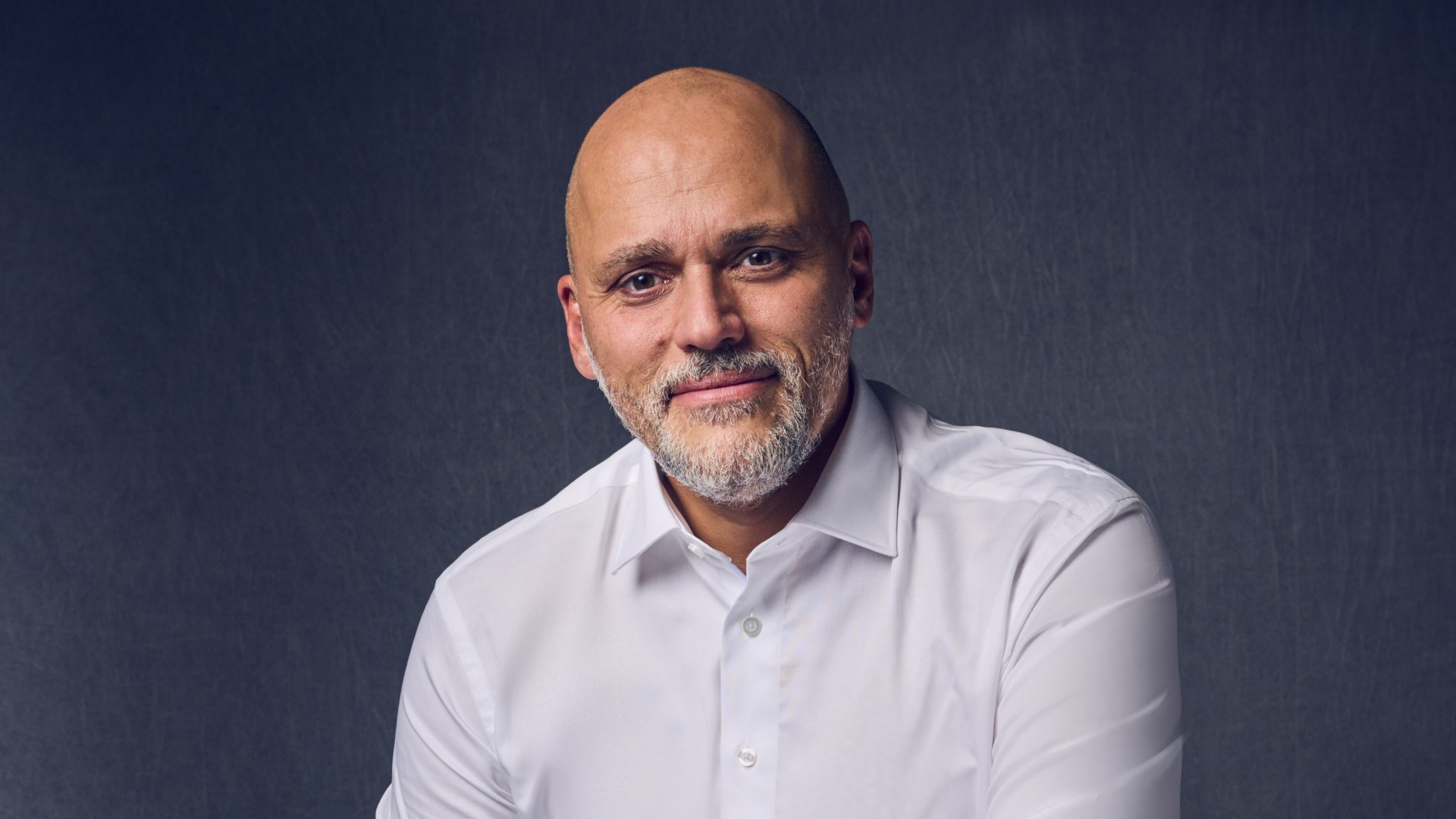
John Shmerler, chief executive of The 1916 Company, argues that Rolex’s Certified Pre-Owned programme has reset consumer trust in resale watches, and that the industry’s true blind spot remains what happens after the sale, not before it.
The American watch trade rarely produces executives who have spent three decades inside a single family of businesses, let alone one who can trace the relationship back to 1988 and a commercial loan. John Shmerler is the exception. Having advised Danny Govberg as a young banker before joining him in Baltimore retail, Shmerler built the Radcliffe jewellers around what he calls a neighbourhood approach to luxury, then watched the business merge in 2023 with Govberg, Hyde Park and the pioneering resale platform WatchBox to form The 1916 Company.
Speaking to Robin Swithinbank and David Sadigh on The Luxury Society Podcast, he set out the logic behind that consolidation, the maturing of Rolex’s official pre-owned programme, and a service problem the industry has tolerated for far too long.
Building The 1916 Company
The 1916 Company today operates as a single retailer of new and pre-owned watches, jewellery and handbags, with outposts across North America, Europe, Asia and the Middle East. Getting there meant folding four previously separate businesses – Govberg, Radcliffe, Hyde Park and WatchBox – into one name, a process Shmerler says took precedence over growth for the company’s first two years.
The clearest sign of what that integration cost was a name. Retiring WatchBox, by some distance the group’s best-known brand, was, in Shmerler’s account, a deliberate short-term sacrifice. The brand had become the clear leader among independent resale platforms, but that success had also boxed it in: a secondary-market specialist could never credibly sell new watches too. The 1916 Company was built from the outset to hold both sides of the trade. The company runs eighteen locations, split between 10 mono-brand boutiques and eight multi-brand stores, under a newly appointed president of retail.
As an authorised Rolex retailer, it has indicated to the brand it intends to expand further in the United States, whether through new doors or acquisition. Its approach to high-value collectors is modelled less on a transactional retailer and more on a private-banking relationship: advisory, appraisal, auction representation and liquidity, whether or not a sale follows.
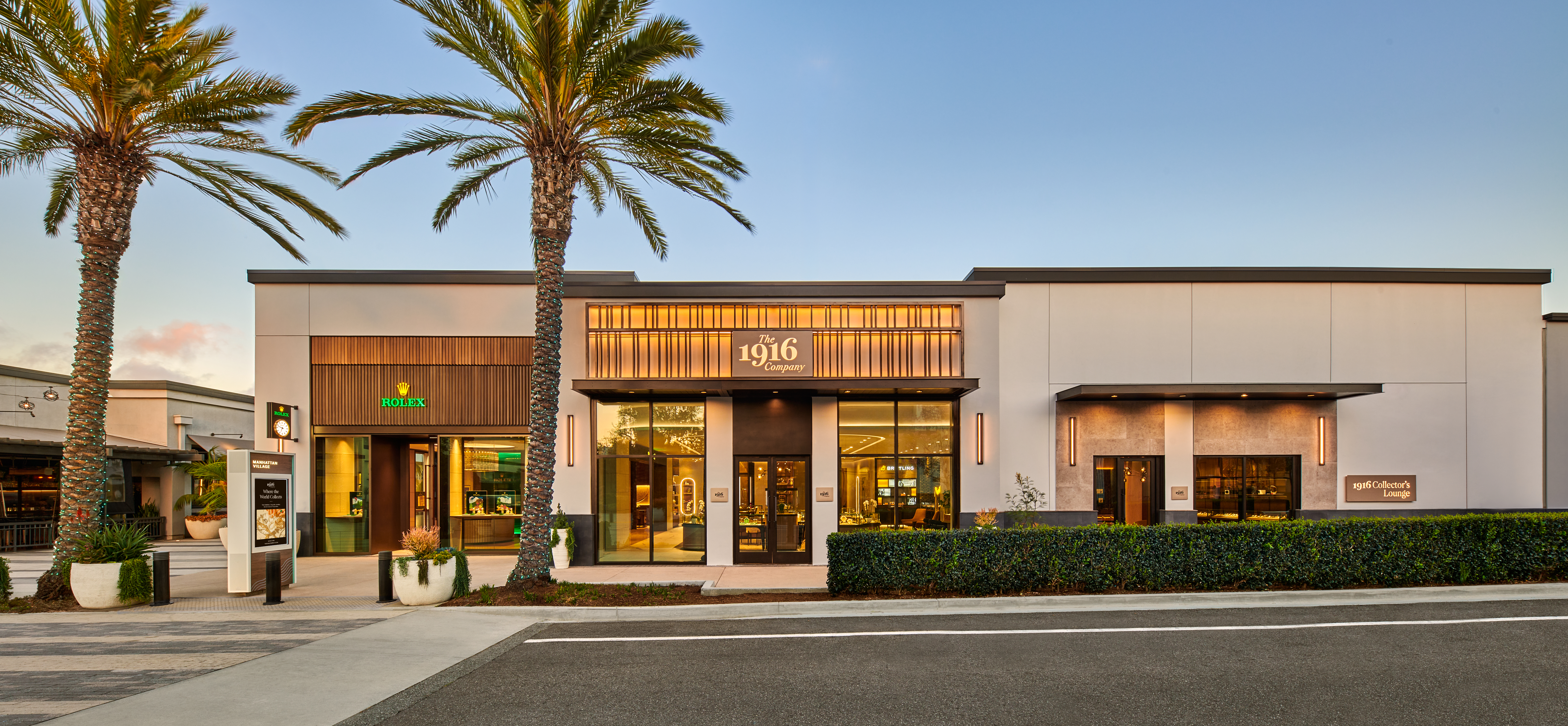
The 1916 Company Manhattan Beach Store Credit: The 1916 Company
The Rolex CPO Programme and the Secondary Market
That same client-first instinct is what pushed The 1916 Company to build early and heavily into Rolex’s Certified Pre-Owned programme, rather than treat pre-owned as an afterthought bolted onto the primary business.
Shmerler offers one of the clearest retailer-side accounts yet of how Rolex Certified Pre-Owned has matured since its December 2022 launch through Bucherer, followed by expansion across the wider authorised network, including the US, from 2023.
As he puts it, “what Rolex did by acknowledging the secondary market was to extend their brand promise to the consumer,” giving buyers confidence that a watch “passed all of the aesthetic and timing tests” the brand requires. Adoption was slow initially, even among experienced collectors, but has accelerated markedly over the past eighteen months, helped by enhanced sealing, certification and packaging. “The original box and papers conversation is a thing of the past,” Shmerler says. “If it’s RCPO, it’s good.”
The wider secondary market has grown alongside it. According to figures from EveryWatch cited in recent trade analysis, global resale value reached $16.7 billion, up 36.4 percent year on year, with dealer transactions accounting for the majority of that total and auctions a smaller share. WatchCharts, separately, estimates Rolex CPO sales specifically at around $300 million in 2024, up from roughly $90 million the year before, a modest slice of the overall secondary market, but a fast-growing one.
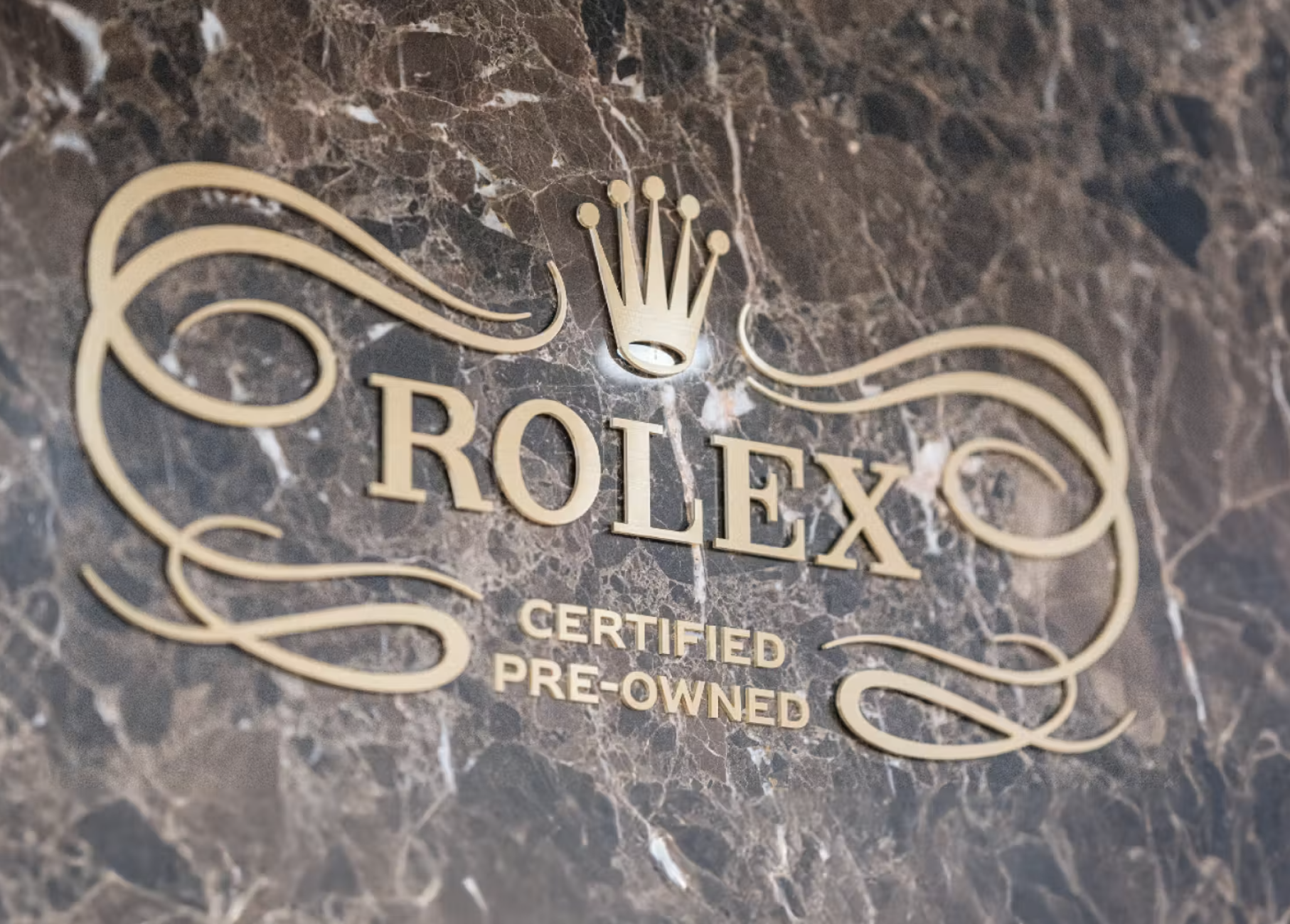
The Rolex Certified Pre-Owned Program Credit: The 1916 Company
Running such an operation at scale, Shmerler notes, required The 1916 Company to build servicing capacity it would not otherwise have prioritised, since Rolex needed its retail partners to absorb the after-sales burden the programme created. That investment feeds into what he regards as the industry’s more persistent challenge: brands rarely explain the lifetime cost of ownership at the point of sale, and repair turnaround then becomes the point of friction.
His prescription, held for a quarter of a century, is to price basic servicing into the watch at the point of purchase. “[Car manufacturers] got it a long time ago,” he says. “You buy a luxury car today, and your basic service – they price it into the car.”
The Current US Market
That same clear-eyed realism carries over to how Shmerler reads the current market: enthusiastic about the moment, but careful not to mistake it for something permanent.
“The United States, I believe right now, is in a euphoric state around watches and around our category, and is leading the way,” Shmerler says, pointing to wealth creation at the top of the market as the driver behind strong results for Rolex, Patek Philippe, Cartier and Omega in particular. Morgan Stanley and LuxeConsult’s ninth annual Swiss Watcher report supports the broader pattern: watches priced above CHF 50,000 accounted for 37 percent of Swiss export value in 2025 against just 1.4 percent of volume, while the US remained the industry’s largest export market at roughly 17% of shipments, even as China’s share fell to 14.1 percent. However, Shmerler is careful to frame this as cyclical rather than universal, noting that Asia’s picture looks markedly different.
Shmerler traces part of that strength to an unlikely source: the Apple Watch. “People would’ve thought [it] would’ve been another one of those downfall things for the watch industry,” he says. “It actually taught people to wear a watch.”
Rather than eroding demand among the wealthy consumer, he argues, the device became an entry point: buyers who might never have worn a watch at all discovered the category through its functionality, before curiosity about what a particular brand signals on the wrist took over. Pop culture reinforced the shift, with athletes and public figures normalising watches as a visible marker of taste. When asked whether the device has been more of an accelerant for the top of the market than a threat to it, Shmerler agrees without hesitation. “That’s my belief,” he says. “I believe that very strongly.”
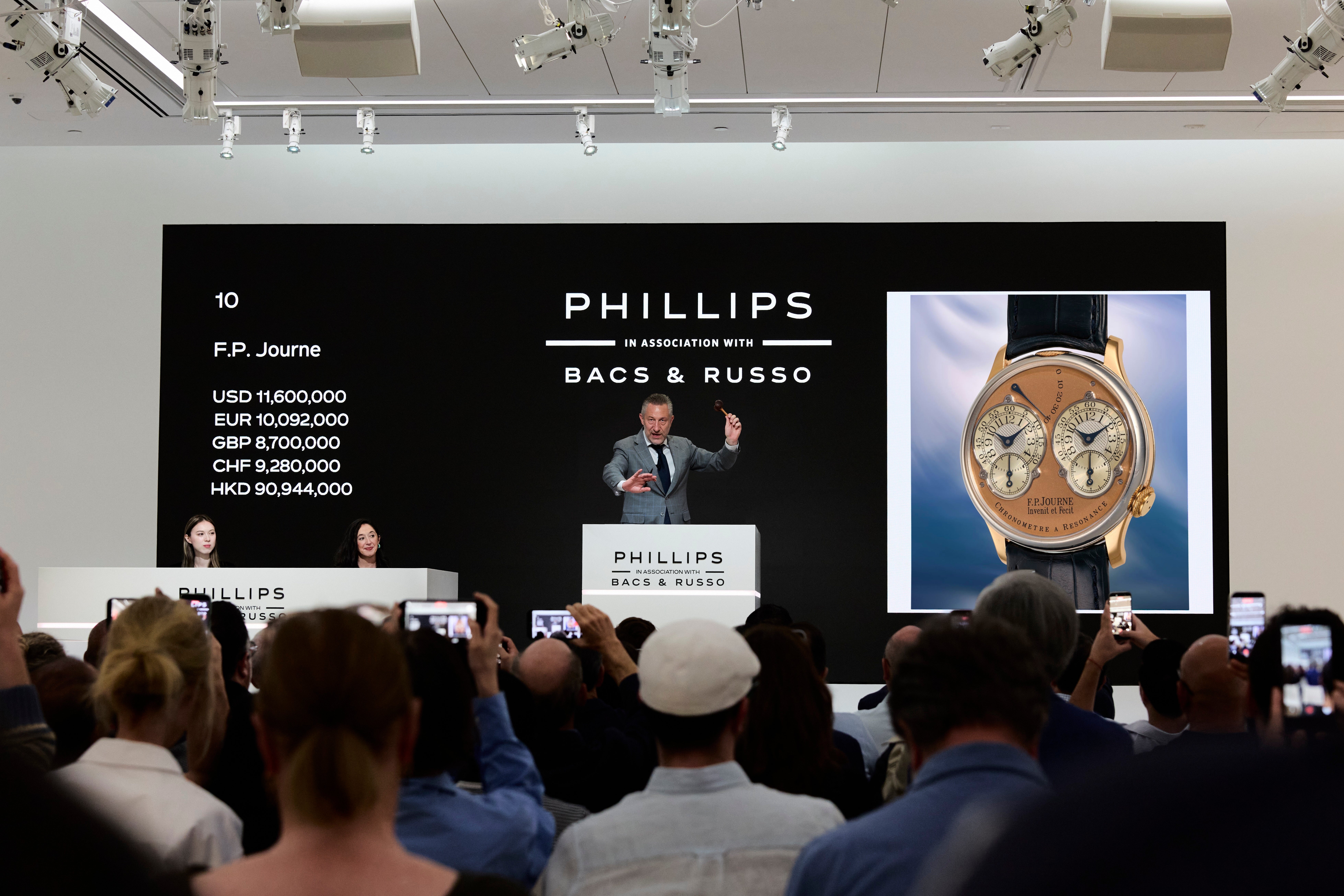
Beyond the current cycle, Shmerler’s confidence in the category also draws on something less tied to any single market’s fortunes: watch-buying as a generational habit. He points to fathers and children visiting manufacture ateliers together, and to collector communities forming around shared knowledge. Auction results – including F.P. Journe’s $13.9 million Chronomètre à Résonance “Souscription, No. 007” at Phillips New York – are, in his view, starting to echo the logic of the fine art market.
The Phillips New York Watch Auction XIV Credit: Phillips
That same throughline runs beneath everything Shmerler has built. The industry, in his account, is only slowly learning to sell an ongoing relationship rather than a single transaction: Rolex’s CPO programme extended trust to the point of resale, The 1916 Company’s collectors’ lounges extend it into advisory and stewardship, and the cost of servicing a watch over its lifetime remains the one piece of that relationship nobody in the trade has properly fixed.
Where the business is heading, in his view, is toward retailers built for the whole relationship – not just the ones equipped to make the sale.
Subscribe to The Luxury Society Podcast to receive notifications about new episodes featuring luxury industry leaders. Never miss an episode as we continue exploring the themes shaping the future of luxury.
Lydianne is a seasoned marketing and communications professional with over a decade of experience in the luxury industry. Having spent six years in Shanghai, she also has a deep understanding of China’s evolving luxury landscape. Currently Global Marketing & Communications Director at DLG, she previously led marketing efforts for DLG China. Before that, she honed her editorial expertise at Prestige in Singapore and later as China Editor of Luxury Society.
The newly released WeChat Luxury Index examines how high-end and luxury brands achieve marketing or business objectives on WeChat. The report also showcases a ranking of these brands, evaluating whether their offerings and services on WeChat are developed enough to meet the sophisticated demands of today’s consumers.
In an exclusive interview for The Luxury Society Podcast’s inaugural episode, TAG Heuer CEO Antoine Pin reveals how the brand’s historic return to Formula 1 aims to conquer new markets, seduce younger consumers, and win the ultimate battle: The one for our wrists.
Five months into the role, the Swiss watchmaker’s new chief executive explains why price has to be earned, why partnerships are won in the execution and why he sees no reason for pessimism
At Geneva Watch Days, Bulgari’s watch managing director weighs a shrinking unit count against resilient export value, and sets out how creativity, women buyers and a disciplined reading of the secondary market could restore the balance.
At a Geneva Watch Days panel on generative engine optimisation and desirability, DLG’s Senior Advisor Antonio Carriero argued that artificial intelligence cannot originate desire, only mediate it. He explains why GEO should be treated as hygiene rather than strategy, and why the brands that win by 2030 will be both machine-legible and unmistakably human.