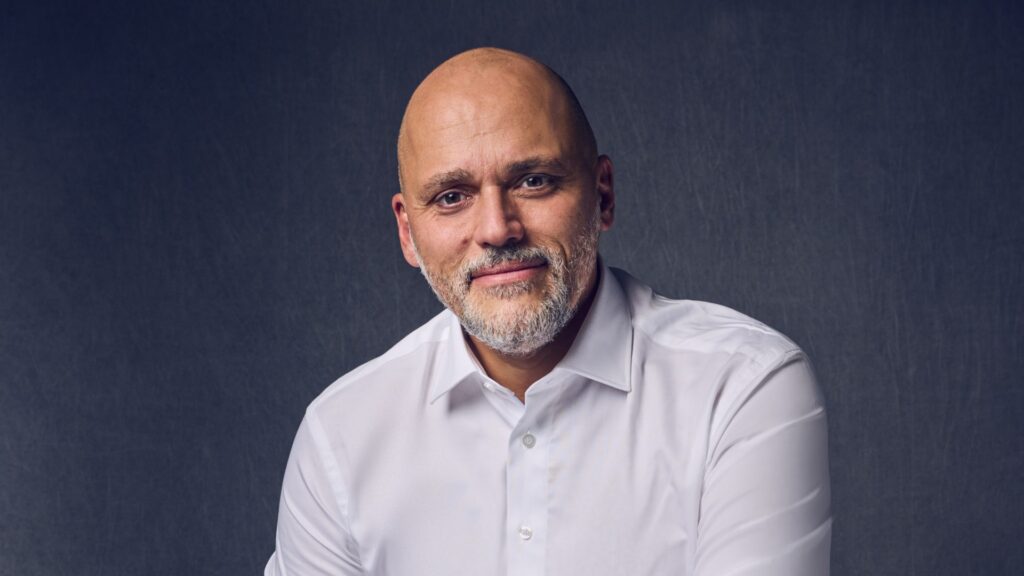
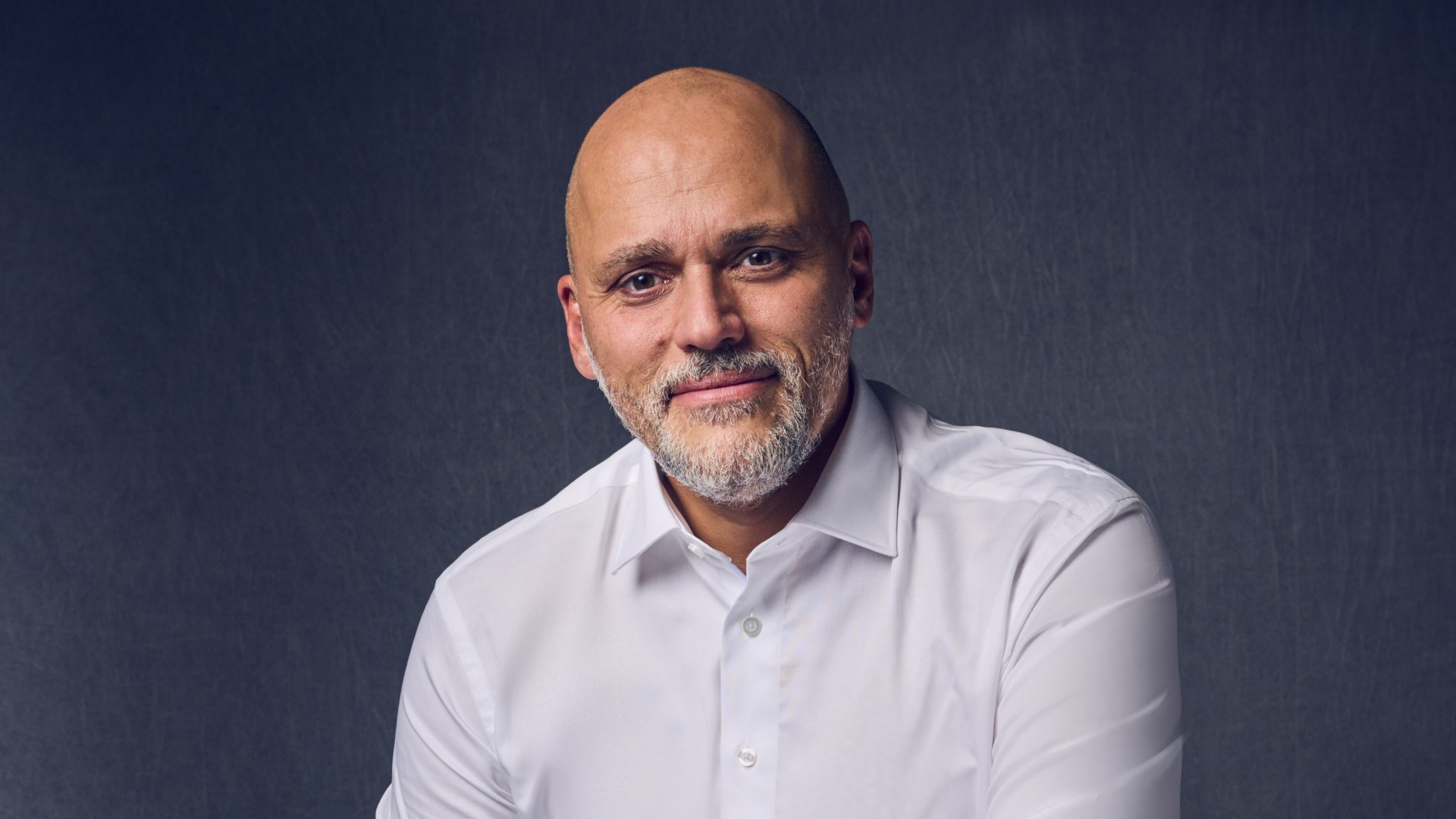
Davide Cerrato on Bremont’s Turnaround: Fewer Watches, Firmer Prices, a Trip to the Moon
Three years after taking the helm of the British watchmaker, Bremont’s chief executive tells why cutting the collection, holding the price ladder and a lunar rover collaboration are the pillars of its recovery.
Davide Cerrato arrived at Bremont in 2023 inheriting a brand with a compelling story and a complicated balance sheet. New investment, a stake taken by the American activist investor Bill Ackman, and the departure of founders Nick and Giles English had left the British watchmaker in a state of flux, its costly in-house manufacturing programme unravelling and its collection sprawling in every direction.
Three years on, having cut the range, overhauled the branding and restructured distribution, Cerrato sits down with Robin Swithinbank on The Luxury Society Podcast to take stock of the transformation, explain the logic behind its most contested decisions, and set out where Bremont goes from here.
Inheriting the Mess, Making the Calls
Cerrato’s assessment of the wider market sets the tone for the rest of the conversation. “The picture is challenging, as I think it is for every watch brand around the world,” he says. “If they say differently, they’re cheating.”
What he inherited at Bremont was, in his description, a business that had grown “in a typical organic way, which is you grab any opportunity out there in a clever way and you turn them into business”, an approach that had left the company with close to 200 references spread across seven product lines, and an in-house calibre programme, the ENG300, that had been launched before it was ready.
The response was systematic. The collection was cut to fewer than 100 references across three lines, the movement programme was paused, and a governing principle was applied across operations, distribution and product. “We are still running, three years after, a programme that is called Simplify to Amplify,” he says, “and it is really the key of this process of transformation.”
The rebranding that accompanied this drew fierce criticism from loyalists, and Cerrato describes the personal cost as the hardest part of the period: “It goes quickly very personal. When I say personal, my wife was personally attacked and insulted on a daily basis. Come on, we are doing watches, we are not doing crazy things.”
His approach was to listen for signals within the noise, adjust where the criticism was warranted, and hold the line everywhere else. The results paid off. “Our fiscal year will close in June and we’ll close a little bit above last year,” he says, “which I think it’s really, really a super strong performance.” This is remarkable for a company operating against an industry backdrop in which, according to the Federation of the Swiss Watch Industry, watches priced above CHF 3,000 declined by 1.9 percent in 2025.
Bremont’s pop up store at Harrods Credit: Bremont
The Value Proposition and the Price Discipline
The second thread running through the conversation is Cerrato’s long-held conviction that over-delivering on value is a deliberate strategy rather than a concession to a softer market. It is a position with a track record: he built Tudor’s Black Bay in the early 2010s on the same premise, targeting a segment vacated by Rolex and Omega as both moved upmarket.
At Bremont, the vehicle is Terra Nova, launched to populate the sub-£3,500 range that Bremont had left unaddressed. Cerrato says the collection has proved its worth over the past two difficult years, both as a hedge against the downturn and as a recruitment lever for new customers. The discipline extends to pricing itself. “This element of value for money for us is extremely important, and we have not increased our watches,” Cerrato said, “so when the tariff hit, even if we were attached, because all our movements come from Switzerland. So we were paying a big increase in cost, but we kept it low.” His golden rule for the segment, “systematically over delivering,” rests on a structural logic rather than a promotional one. Early customers extend trust to a brand before it has earned a reputation, and that trust carries a price the brand has to honour.
The market data suggests Cerrato is positioned where the pressure points are. Bain and Altagamma’s Spring 2026 update forecasts personal luxury goods growth of 2 to 4 percent this year, led by an accelerating Americas market where upper-middle-class spending is growing at roughly twice the rate of the affluent segment and under-35 customers are outpacing older ones. The same study describes a consumer newly unforgiving on value and notes that while more than 70 percent of lapsed luxury customers intend to return, they feel no obligation to return to the brands they left. For a small watchmaker recruiting first-time buyers at a held price point, that is less a headwind than an opening.
The Bremont Terra Nova 40.5 Date Watch Credit: Bremont
The Moon, the Machine and What Comes Next
The forward-looking portion of the conversation turns on two things: space and geography. Bremont has partnered with Astrolab, a 150-person California aerospace company, to send the head of its new Supernova chronograph to the lunar south pole aboard Astrolab’s FLIP rover, part of Astrobotic’s Griffin Mission One, launching from NASA’s Kennedy Space Center later this year. Cerrato frames the mission not as a marketing exercise but as a logical extension of Bremont’s founding obsession with durability under extreme conditions, noting that the watch will undergo the same protoflight qualification testing as the rover itself, including thermal, vacuum and vibration testing designed to simulate conditions on the lunar surface. The mission also coincides with the establishment of Coordinated Lunar Time, an atomic-clock-based standard NASA has been tasked with developing by the end of 2026.
On the commercial side, Cerrato describes what he calls “phase two of the turnaround”, governed by a domestic logic: “once you have cleaned your home, you’re ready to invite people…now we are capable of scaling up.” Bremont has delivered watches for its first French point of sale, opening in Paris in early July, with a Tokyo launch to follow weeks later, a market where he expects “Britishness and everything military” to resonate. India, where the brand has worked with the retailer Ethos for several years, he names as “definitely one of the big markets for the future.”
The Bremont Supernova Chronograph Watch Credit: Bremont
Cerrato’s answer to the final question of the conversation, on the best piece of business advice he has received, is three words: “never give up.” It is a disarmingly simple line from someone who reshaped Tudor’s commercial fortunes, absorbed a year of public hostility at Bremont, and is now preparing to send a watch to the moon. But set against the rest of the conversation, it reads less like a platitude than a description of method: cut what does not work, hold the price where it matters, and keep building toward the next horizon, wherever that happens to be.
Subscribe to The Luxury Society Podcast to receive notifications about new episodes featuring luxury industry leaders. Never miss an episode as we continue exploring the themes shaping the future of luxury.
Lydianne is a seasoned marketing and communications professional with over a decade of experience in the luxury industry. Having spent six years in Shanghai, she also has a deep understanding of China’s evolving luxury landscape. Currently Global Marketing & Communications Director at DLG, she previously led marketing efforts for DLG China. Before that, she honed her editorial expertise at Prestige in Singapore and later as China Editor of Luxury Society.
The newly released WeChat Luxury Index examines how high-end and luxury brands achieve marketing or business objectives on WeChat. The report also showcases a ranking of these brands, evaluating whether their offerings and services on WeChat are developed enough to meet the sophisticated demands of today’s consumers.
In an exclusive interview for The Luxury Society Podcast’s inaugural episode, TAG Heuer CEO Antoine Pin reveals how the brand’s historic return to Formula 1 aims to conquer new markets, seduce younger consumers, and win the ultimate battle: The one for our wrists.
Five months into the role, the Swiss watchmaker’s new chief executive explains why price has to be earned, why partnerships are won in the execution and why he sees no reason for pessimism
At Geneva Watch Days, Bulgari’s watch managing director weighs a shrinking unit count against resilient export value, and sets out how creativity, women buyers and a disciplined reading of the secondary market could restore the balance.
At a Geneva Watch Days panel on generative engine optimisation and desirability, DLG’s Senior Advisor Antonio Carriero argued that artificial intelligence cannot originate desire, only mediate it. He explains why GEO should be treated as hygiene rather than strategy, and why the brands that win by 2030 will be both machine-legible and unmistakably human.