Swiss Watchmaking’s Most Seasoned Voice on Why the Industry’s High End Has Nothing to Fear
Jean-Claude Biver has spent five decades navigating every crisis the Swiss watch industry has produced and his verdict on the current one is consistent with all of them. The high end does not sell watches. It sells dreams, desire and eternity. That, he argues, is precisely why it has nothing to fear.
In 2024, Swiss watch exports fell for the first time in four years, declining 2.8% to CHF 26 billion and contracting in volume by 9.4% to 15.3 million units, according to the Federation of the Swiss Watch Industry. Demand from China, which had powered the pandemic surge, fell 25.8%. The year that followed brought further disruption: gold surpassed USD 4,000 per troy ounce for the first time while US tariffs on Swiss imports climbed to 39% before a bilateral agreement reduced them to 15% in November.
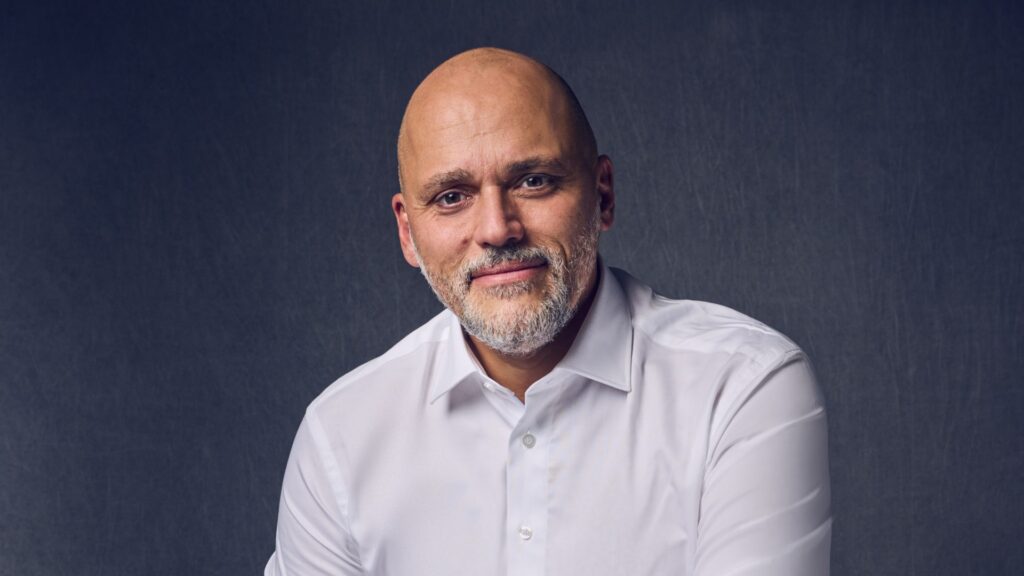
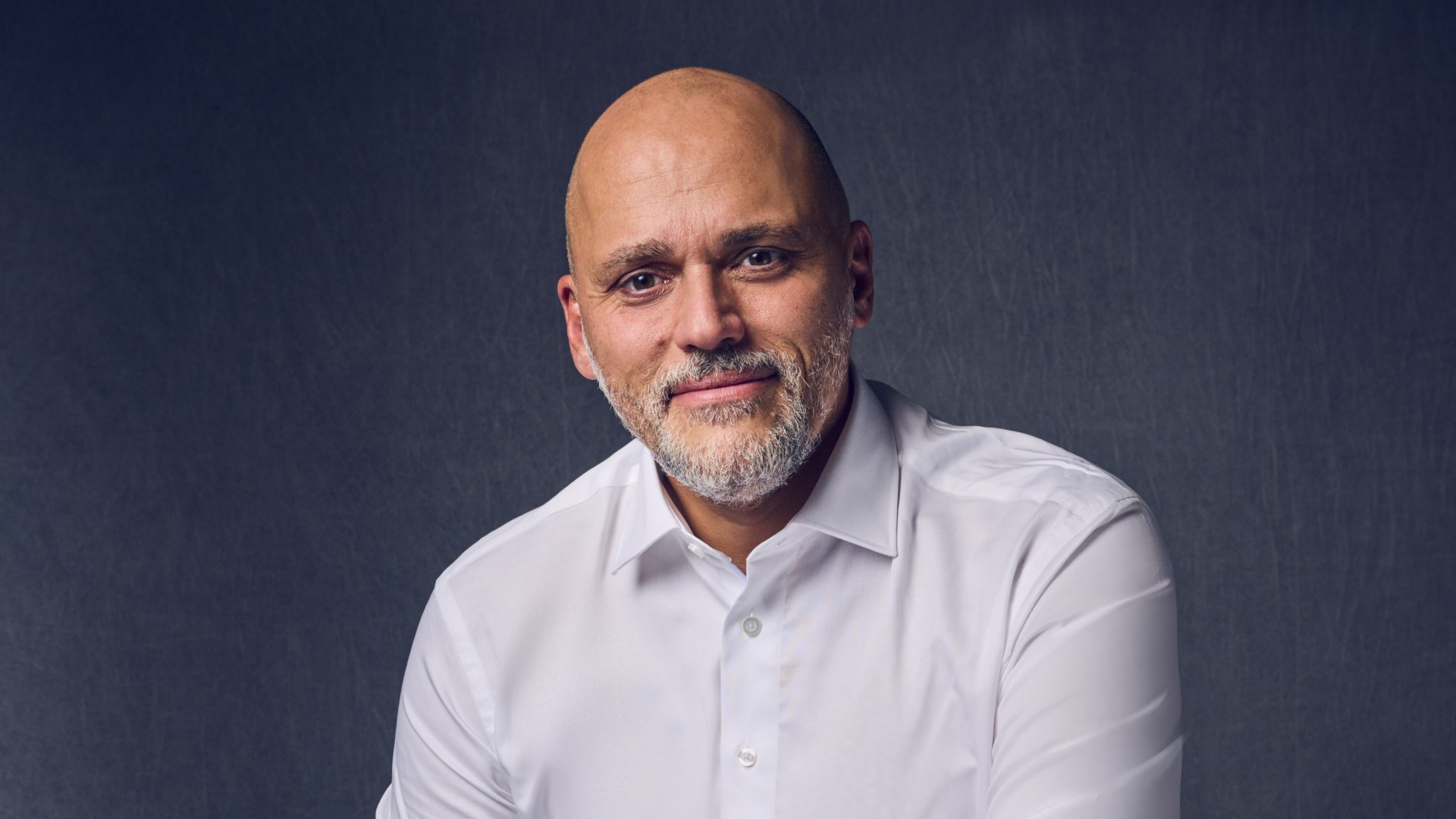
Against this backdrop, few voices in the industry carry more weight than Jean-Claude Biver’s. Over five decades, he revived Blancpain in the wake of the quartz crisis, engineered Hublot’s transformation from mid-tier outlier to LVMH acquisition, and now, in his mid-seventies, has launched a watch company in his own image. In a previous episode ofThe Luxury Society Podcast, Biver reflects on the industry’s headwinds, the thinking behind his newest venture, and the philosophy that has guided a career few could rival.
The market in perspective
On the state of Swiss watchmaking, Biver is measured but direct. The current contraction is neither unprecedented nor terminal – and it will not affect all segments equally.
“On the long term, even on the medium term, I see the Swiss watch industry still strong and still doing very well,” he says. “It’s not because we have now a crisis that the whole industry will be forever in the crisis.” His reasoning is structural rather than cyclical — and it finds support in the Deloitte Swiss Watch Industry Study 2025, based on a survey of 111 senior executives and 6,500 consumers across thirteen markets. While 43% of executives hold a negative outlook for their main export markets overall, sentiment diverges sharply by price segment: 64% remain confident in the outlook for watches priced above CHF 50,000 at retail, while nearly 60% view the prospects for entry-level and mid-range timepieces as negative. The pattern tracks precisely with Biver’s conviction that the transaction changes in character at a certain price level. “From a certain price level on, we don’t sell watches,” he says. “We sell dream, we sell emotions, we sell desire, we sell exclusivity, we sell quality, we sell eternity.” On the consumer side, the same study found that 72% of respondents across its global survey intend to purchase a traditional watch in the next twelve months for personal use – a signal that underlying demand remains intact even as export volumes contract.
Biver is candid about the present difficulties: gold at historically elevated levels, trade friction with Washington, and an abrupt contraction in Chinese demand. But his conclusion is that the industry’s high end remains insulated by the nature of what it is actually selling. He has, after all, lived through the quartz crisis of the 1970s, dramatic currency fluctuations and multiple market downturns. “After the crisis,” he says with the confidence of experience, “comes back some good time.”
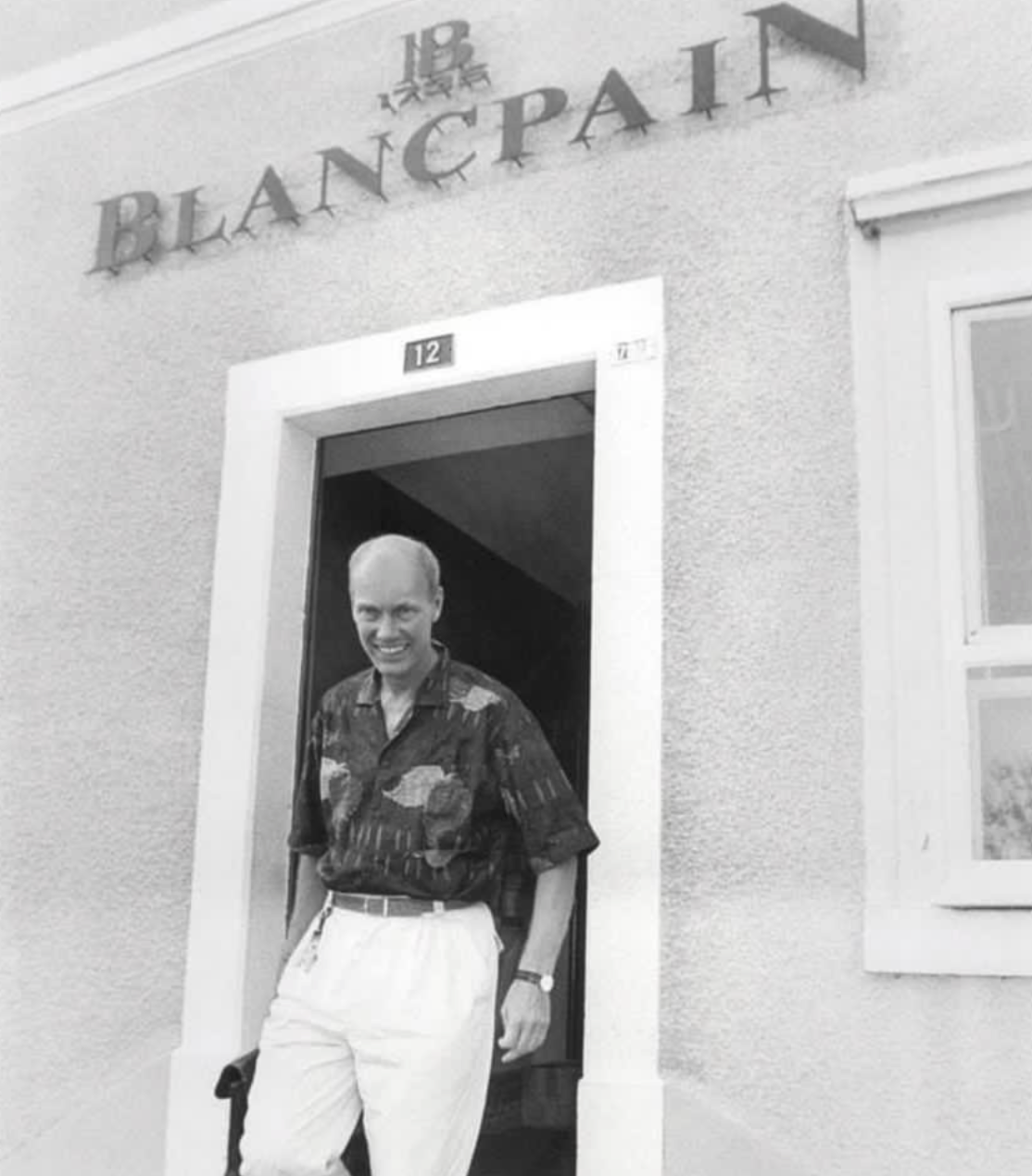
Jean-Claude Biver in front of the Blancpain workshop house in the 1980s. Credit: Biver
Biver the brand, and the philosophy of invisibility
What distinguishes Biver — the company founded in 2022 alongside his son Pierre and based in the Swiss village of Givrins — from anything he has built before is its deliberate distance from precedent. He was not looking to recreate Hublot or reprise Blancpain. “I hate to repeat myself, and I didn’t want a repetition of Omega or repetition of Blancpain,” he says. “I want no repetition and that is the most important.”
The focus instead has turned to what he calls the invisibility: the finishing, the polishing, the decoration of surfaces no customer will ever see. “The back of the hands, which you never see,” he explains — the underside, never shown, polished to the same exacting standard as the top. “To master the invisibility, to master what you cannot see, but what the soul can feel.” These are details that exist, in his formulation, for the unconscious of the buyer — the felt quality that separates a genuinely exceptional object from a merely costly one.
The brand produces roughly 100 watches per year across approximately ten markets. To Biver, that scale is not a limitation but a position, a strategic choice that insulates the brand from macroeconomic noise and makes genuine scarcity not a marketing claim but a mathematical fact. “We are totally contrarian in the numbers of watches we produce, in the quality we produce, in the turnover we do,” he says. “We are totally contrarian and that’s our big chance.” This sits in pointed alignment with findings from the 2025 Morgan Stanley-LuxeConsult and Deloitte Swiss Watch Industry Study reports, both of which characterise the current period as one of polarisation: momentum has concentrated in a small number of brands whose output is perceived as genuinely rare and desirable, while volume-dependent segments face structural pressure. Biver, producing 100 pieces a year, may be the most concentrated expression of that principle currently in the market. “Be first. Be different. Be unique,” he says. “When you are first, when you are unique, you cannot lose.”
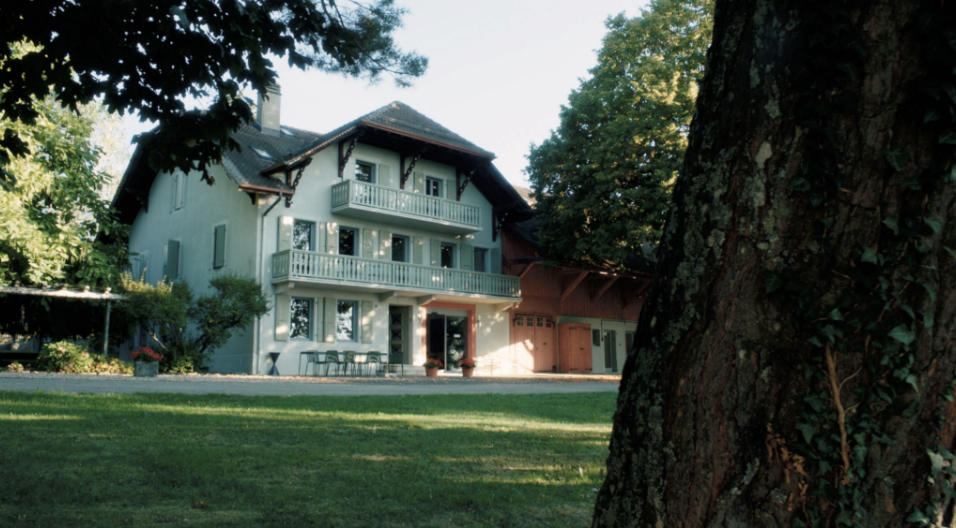
The Biver’s House: a three-storey farmhouse where master watchmakers and decorators bring craftsmanship to life every day. Credit: Biver
Independence, groups and the lessons of a career
Biver has sold two brands to large groups — Blancpain to the Swatch Group in 1992, and Hublot to LVMH in 2008 following a fivefold increase in revenues under his leadership — and the conversation turns candidly to what those decisions taught him. The appetite among conglomerates for independent acquisitions is understandable, he says, but the challenge is not the purchase.
Running an independent venture requires a different mentality from managing a brand within a conglomerate, a different emotional investment and, ultimately, a different kind of love. “In big groups, you have managers that even don’t love watches,” he says. The people who build the most compelling independent brands, he notes, wear their own watches and keep them when they leave. He credits the calibre of management — rather than marketing budgets — with the success of the brands he regards most highly.
Biver singled out Richard Mille for special praise, recognising it as one of the most exclusive watchmakers:”The management of Richard Mille is just brilliant. If it’s the management of the PR, if it’s the management of the marketing, the management of the design of the watches, the quality of the watches, management is key.”
Biver is direct, too, about his own decisions. The sale of Blancpain was, in retrospect, a mistake, one that required years to process. “When I sold Blancpain, I made a mistake,” he says, “and this mistake needed to be digested, and the full digestion came on the day I started my own brand.” The brand he now runs is structured as a family business — with Pierre as co-founder and creative director, alongside son-in-law and Chief Marketing Officer Nolan Buchi and CEO James Marks, formerly head of Phillips Perpetual — and the aspiration to sell it is, he says, absent entirely. “I have two sons in the company. I have my son-in-law, Nolan, et cetera. So it is really built, from A to Z, like a family business.”
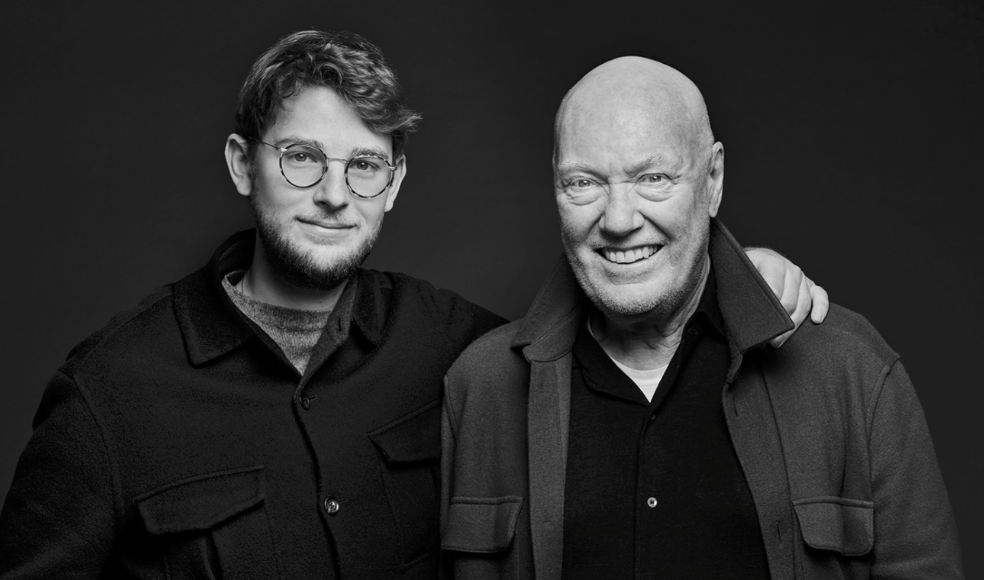
Jean-Claude Biver and Pierre Biver Credit: Biver
Asked about legacy at the close of the conversation, Biver steps away from watchmaking entirely. What has structured his life, he says, is not the industry but a philosophy rooted in love — in sharing, in forgiving, in giving back. “My biggest passion is love,” he says, “to try to give back, to try to share, to try to understand, to try to forgive.” It is a note of unexpected candour from one of the watch world’s most instinctive operators, and a reminder that the qualities which built a half-century career — conviction, timing, the refusal to stand still — can be traced to principles that have nothing to do with commerce at all.
Subscribe to The Luxury Society Podcast to receive notifications about new episodes featuring luxury industry leaders. Never miss an episode as we continue exploring the themes shaping the future of luxury.
Lydianne is a seasoned marketing and communications professional with over a decade of experience in the luxury industry. Having spent six years in Shanghai, she also has a deep understanding of China’s evolving luxury landscape. Currently Global Marketing & Communications Director at DLG, she previously led marketing efforts for DLG China. Before that, she honed her editorial expertise at Prestige in Singapore and later as China Editor of Luxury Society.
The newly released WeChat Luxury Index examines how high-end and luxury brands achieve marketing or business objectives on WeChat. The report also showcases a ranking of these brands, evaluating whether their offerings and services on WeChat are developed enough to meet the sophisticated demands of today’s consumers.
In an exclusive interview for The Luxury Society Podcast’s inaugural episode, TAG Heuer CEO Antoine Pin reveals how the brand’s historic return to Formula 1 aims to conquer new markets, seduce younger consumers, and win the ultimate battle: The one for our wrists.
At Geneva Watch Days, Bulgari’s watch managing director weighs a shrinking unit count against resilient export value, and sets out how creativity, women buyers and a disciplined reading of the secondary market could restore the balance.
At a Geneva Watch Days panel on generative engine optimisation and desirability, DLG’s Senior Advisor Antonio Carriero argued that artificial intelligence cannot originate desire, only mediate it. He explains why GEO should be treated as hygiene rather than strategy, and why the brands that win by 2030 will be both machine-legible and unmistakably human.
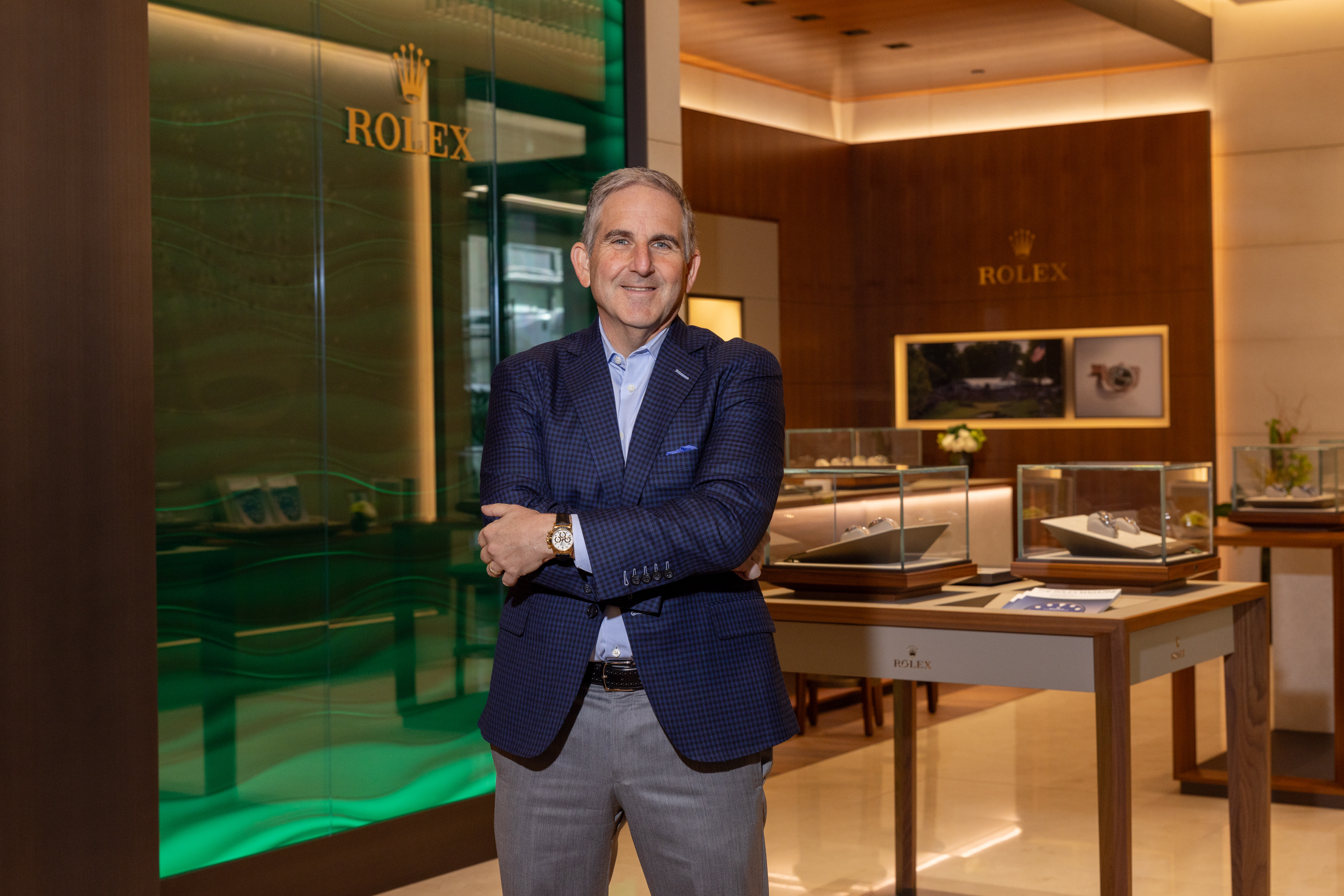
John Shmerler, chief executive of The 1916 Company, argues that Rolex’s Certified Pre-Owned programme has reset consumer trust in resale watches, and that the industry’s true blind spot remains what happens after the sale, not before it.