Ten Years in the Desert: How Hind Seddiqi Built the Watch World’s Most Coveted Gathering
Ten years ago, Dubai Watch Week was an outlier with ambitions that seemed, at best, optimistic. Today it has a waiting list of brands, a Rolex CEO on its stage, and no intention of becoming anything other than exactly what it always was.
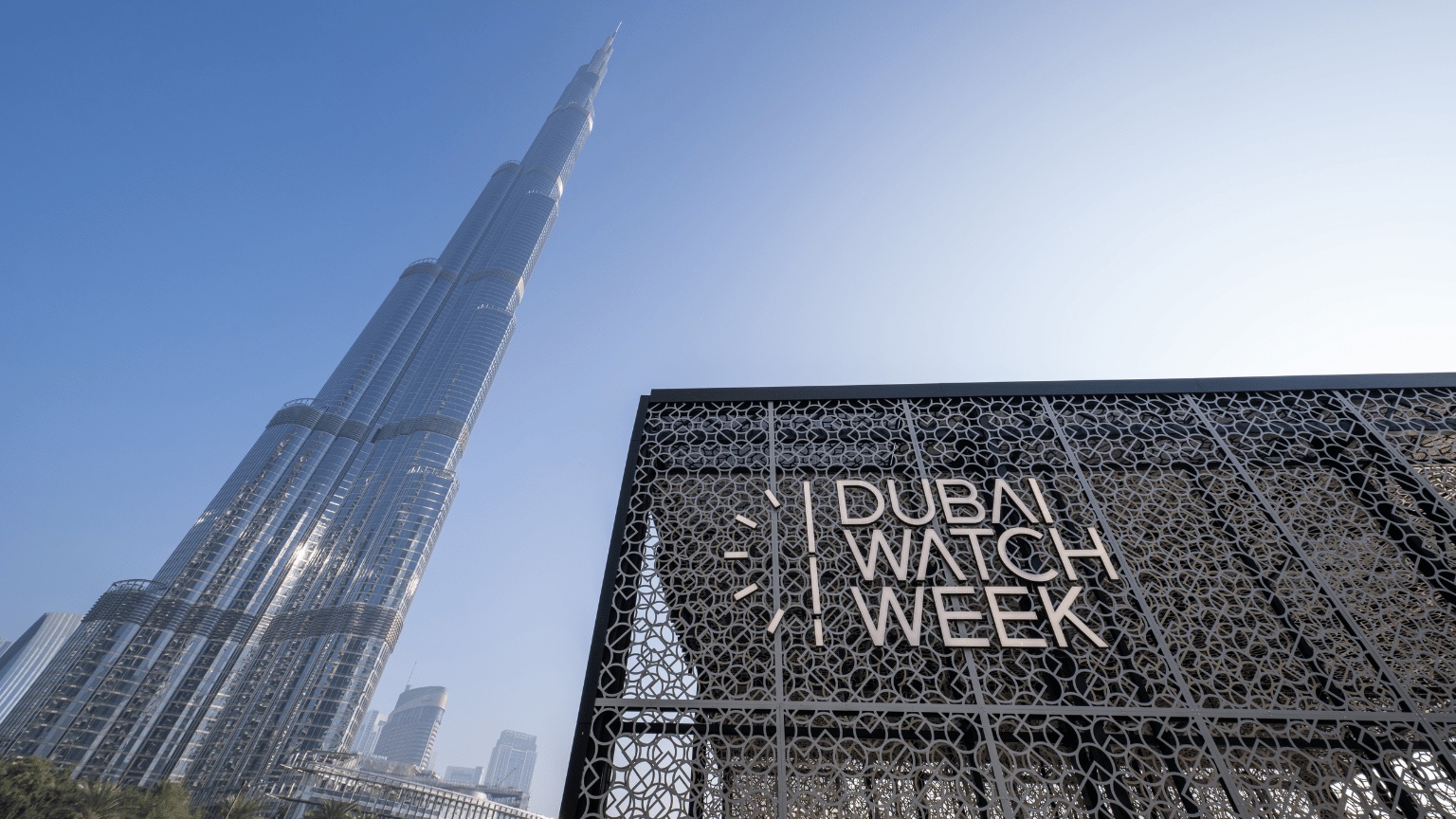
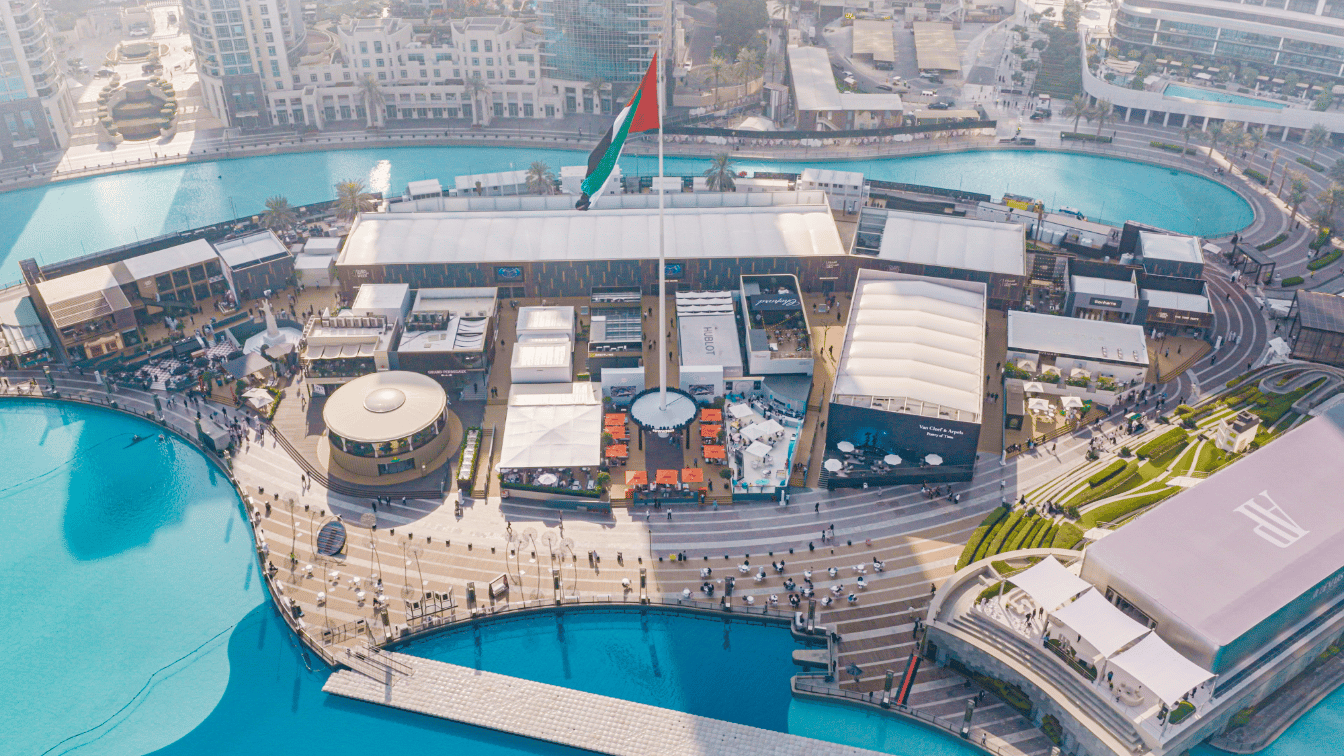
When Dubai Watch Week opened its doors in 2025 at Dubai Mall, Burj Park – twice the size of its previous edition, with 90 exhibiting brands, 13 standalone multi-storey booths, and Rolex, Audemars Piguet, and Vacheron Constantin among its lead partners – it did so having outlasted the very institutions that once defined the watch event calendar.
Baselworld and SIHH (now known as Watches and Wonders Geneva), the Swiss mega-fairs that dominated the industry’s attention when Hind Seddiqi first gathered a handful of independent watchmakers in Dubai a decade ago, are now memories. The event she founded in 2015 is emphatically not.
Now in its tenth year, Dubai Watch Week carries a waiting list of brands it cannot accommodate, an audience of international collectors flying in from watch clubs across multiple continents, and a rare public appearance on its programme from Rolex chief executive Jean-Frédéric Dufour. Seddiqi, founder of Dubai Watch Week and Chief Marketing and Communications Officer at Ahmed Seddiqi & Sons, spoke on The Luxury Society Podcast, recorded just days before the 2025 edition opened, to trace how she built it, what she has fiercely protected along the way, and where the next chapter leads.
Dubai Watch Week 2025 Credit: Dubai Watch Week
The Formula: Non-Commercial by Design
The proposition at the core of Dubai Watch Week has never wavered: no on-site sales, no targets, no brand representatives pursuing collectors across the floor. What Seddiqi describes in its place is something considerably harder to engineer, an environment built for encounter. “It’s more casual, it’s more relaxed,” she says, “and for watch brands and watch CEOs to walk through the pavilion and meet these small, independent watchmakers. I can see the spark in their eyes, and say, oh my God, I never thought Mr Dufour would stop by and say hello.”
That quality of meeting, between major group executives and the kind of small-workshop craftspeople who might otherwise occupy entirely different professional worlds is, she argues, structurally impossible to replicate at more commercially pressured events. The collaborations that originated at Dubai Watch Week bear that out: MB&F and H. Moser, MB&F and Bulgari, both emerged from conversations first had on its floor.
The non-commercial format was not an accident of early-stage pragmatism; it was a deliberate strategic position. Brands are prohibited from selling on site, although orders may be taken. “ Because you give them targets, it just becomes another war, a battle that they have to go through” Seddiqi notes, “and the clients don’t like that.” That clarity of terms is, she says, precisely why brands of the scale now on the exhibitor list have invested in expensive standalone booths. “We’ve proven ourselves that we are there to serve the industry,” she says, “and brands started to believe in Dubai Watch Week and believe that the format that we proposed, which is a non-commercial format, does work.”
Dubai Watch Week 2025 Credit: Dubai Watch Week
The Conversation the Industry Wasn’t Having
One of Dubai Watch Week’s less remarked-upon contributions to the broader industry has been the Horology Forum, an open-platform debate format that Seddiqi created because she identified a structural problem: watch brands were not talking to one another about the challenges they shared.
The retailer’s perspective gave her a particular vantage point. “We as retailers used to sit with brands and listen to the issues, problems, or challenges they’re having. Sometimes, another brand would have already resolved that challenge and could share that knowledge to help solve that,” she explains.
The forum was designed to give that conversation a dedicated space, free from public relations management and brand messaging frameworks. “I remember with the very first forum, one of the press members said ‘it was the first time I sit in a room where I can ask any question I want without having a PR person standing there telling me, no, you cannot talk about this,” Seddiqi recalls.
Since then, the open-panel debate format has been adopted, and adapted by virtually every other event on the watch calendar. The original, however, retains a distinctive independence: Seddiqi is unequivocal that neither brands nor media houses set the agenda. “Horology Forum is our territory,” she says. “You’re more than welcome to share ideas, but then we decide who and what topic we’re going to bring onto the table, just to stay neutral and not allow influences from different groups, brands, even media houses.”
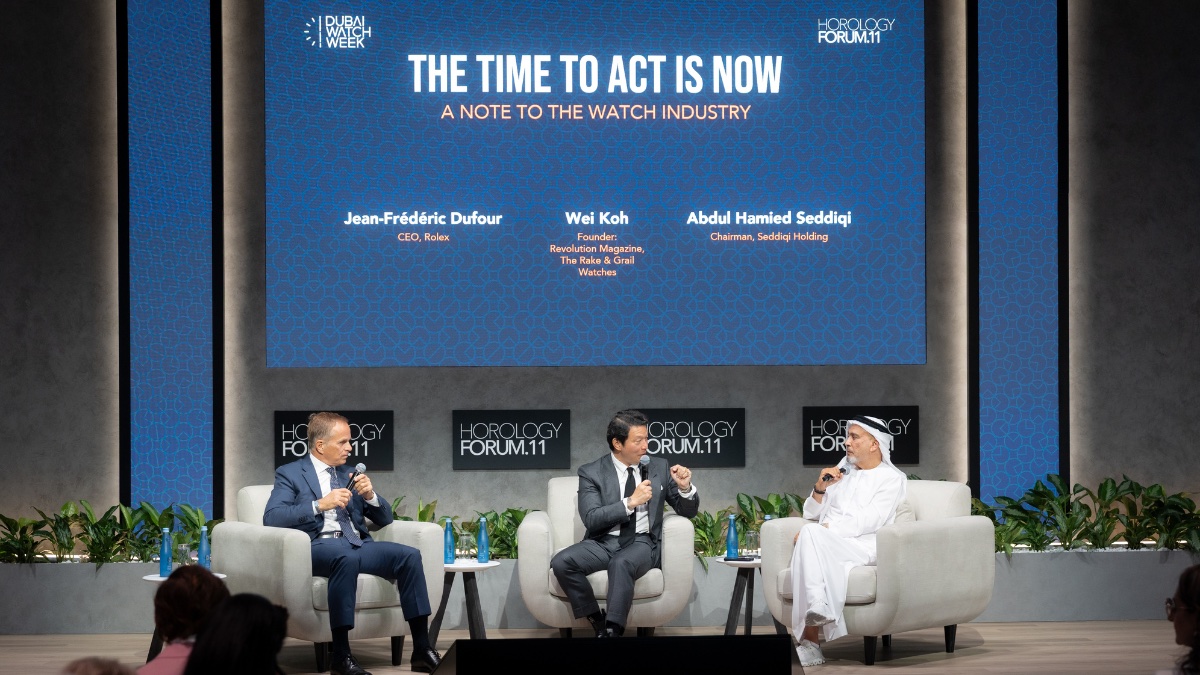
Last year’s edition featured what amounts to a rare industry moment: Rolex chief executive Jean-Frédéric Dufour on stage. Seddiqi is careful to contextualise the appearance. “The panel is really not a panel about Rolex,” she explains. “There’s something that he wants to convey for the industry. And it’s not for Rolex. So he’s not coming in to speak as the CEO of Rolex. He’s coming with a bigger message.”
Jean-Frederic Defour speaking at the Horology Forum Credit: Dubai Watch Week
The Question of Scale
Dubai Watch Week’s rise has tracked closely with the Gulf’s emergence as a structurally significant luxury market. According to the Federation of the Swiss Watch Industry, Swiss watch exports to the UAE grew substantially across the 2010s, with the market now consistently ranked within the world’s top ten import destinations for Swiss timepieces.
The numbers tell a consistent story. Even as global Swiss watch exports declined for a second consecutive year in 2025, falling to CHF 25.6 billion, the Gulf continued to outperform: the UAE recorded growth of 3.5% and Saudi Arabia 8.9%, despite sharp contractions in China and Japan. Backed by strong retail infrastructure, a gifting culture, and consumers who actively wear rather than store their purchases, the region’s resilience appears structural rather than cyclical.
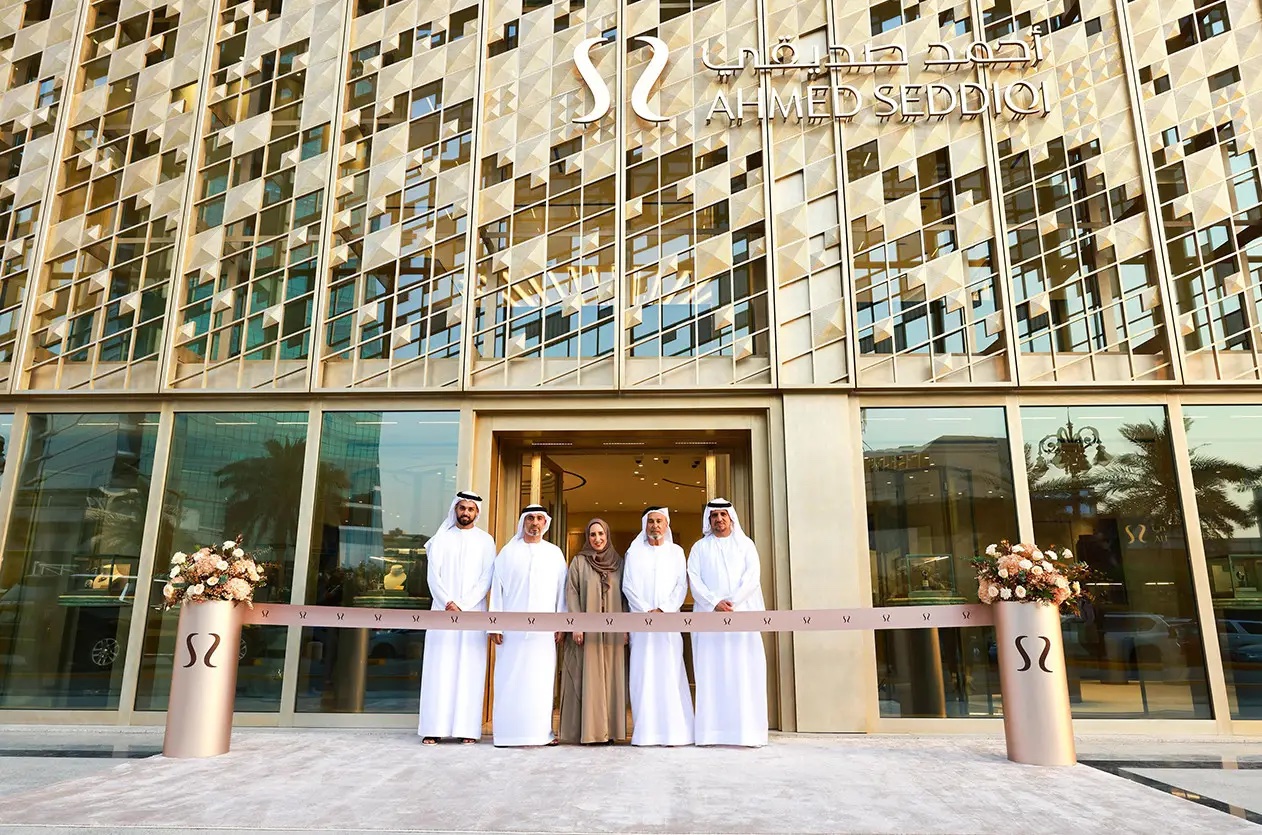
The next chapter, she suggests, is Saudi Arabia, where Ahmed Seddiqi opened its first retail location in 2025, in celebration of the company’s 75th anniversary. She acknowledge that the market requires patience. “It’s a bit slower than Dubai, I must admit. It’ll take a bit of time.” But the commercial logic of proximity over expectation is not lost on her. “It’s time for us to go to them rather than them coming to us,” she says. “If you don’t jump on the wave now, it might sometimes be too late.”
Ahmed Seddiqi’s grand opening in Saudi Arabia Credit: Ahmed Seddiqi
On the question of whether Dubai Watch Week will continue to grow beyond its current scale, Seddiqi offers a response that is unusually restrained for a founder presiding over a decade of compounding momentum. “It doesn’t make sense to just go bigger and accommodate more brands just for the sake of being able to do that,” she says. “We have to have a size that you can finish in one or two days.” That clarity of purpose, the insistence that the event serves its audience rather than its own ambition is, more than any single brand partnership or headline booking, the most coherent explanation for what Dubai Watch Week has become.
Subscribe to The Luxury Society Podcast to receive notifications about new episodes featuring luxury industry leaders. Never miss an episode as we continue exploring the themes shaping the future of luxury.
Lydianne is a seasoned marketing and communications professional with over a decade of experience in the luxury industry. Having spent six years in Shanghai, she also has a deep understanding of China’s evolving luxury landscape. Currently Global Marketing & Communications Director at DLG, she previously led marketing efforts for DLG China. Before that, she honed her editorial expertise at Prestige in Singapore and later as China Editor of Luxury Society.
The newly released WeChat Luxury Index examines how high-end and luxury brands achieve marketing or business objectives on WeChat. The report also showcases a ranking of these brands, evaluating whether their offerings and services on WeChat are developed enough to meet the sophisticated demands of today’s consumers.
In an exclusive interview for The Luxury Society Podcast’s inaugural episode, TAG Heuer CEO Antoine Pin reveals how the brand’s historic return to Formula 1 aims to conquer new markets, seduce younger consumers, and win the ultimate battle: The one for our wrists.
Rapha built one of cycling’s most devoted communities, then spent seven years diluting the very identity that made it matter. Fran Millar, appointed chief executive in September 2024, is now tasked with winning it back.
Jean-Claude Biver has spent five decades navigating every crisis the Swiss watch industry has produced and his verdict on the current one is consistent with all of them. The high end does not sell watches. It sells dreams, desire and eternity. That, he argues, is precisely why it has nothing to fear.
As Swiss watch exports contract and the mid-range empties out, an Indian giant with 200 million watches sold and a $46,000 tourbillon in its portfolio is quietly assembling a case that the establishment may find difficult to dismiss.