The Heirs Are Not Waiting: Why High Net Worth Gen Z Is Already Reshaping Luxury
High net worth Generation Z consumers are influencing luxury brand strategies today, not tomorrow. New research reveals why the industry can no longer defer engagement with the children of affluent families.
For decades, luxury strategy has operated on a predictable timeline: engage younger audiences once their purchasing power matures. Wealth follows age, and influence arrives with capital. That assumption is now fundamentally outdated.
According to the Altiant HNWZ Report (2025), High Net Worth Generation Z (HNWZ) – the children of affluent and ultra-affluent families – are already shaping luxury’s cultural trajectory, long before they formally control capital. The data is unambiguous: these consumers influence household brand perception, validate choices within their networks, and represent future custodians of intergenerational wealth.
The heirs are not waiting. Neither can luxury.
Who Are High Net Worth Gen Z?
The Altiant study surveyed 1,775 respondents across the United States, United Kingdom, France and China, including a distinct cohort of HNWZ individuals. Whilst their personal spending remains modest compared to established high net worth individuals, their influence footprint is disproportionately large.
This cohort operates at a critical intersection. They shape household-level brand perception within affluent families. They act as cultural validators in their social circles. They will eventually inherit significant wealth. Luxury has historically focussed on the moment of wealth transfer, but brand relationships are formed far earlier than balance sheets suggest.
Redefining Luxury
One of the report’s most revealing findings concerns how HNWZ defines luxury itself. Traditional high net worth consumers root luxury in heritage, exclusivity and status signalling. High net worth Gen Z describes it differently: expensive and high quality, desirable and culturally relevant, socially visible and digitally validated.
Exclusivity alone no longer suffices. Desirability has become the primary gateway to aspiration. This doesn’t signal erosion of luxury codes, but demands their reinterpretation for a generation that consumes culture before products.
Lower Spend, Higher Strategic Value
The report confirms HNWZ currently spends less on luxury than older high net worth individuals. Focussing solely on transaction value, however, misses the larger strategic signal.
This cohort demonstrates high brand awareness at an early age, strong emotional alignment with select brands, and clear preference for culturally fluent and digitally native labels. Luxury brand-building must precede luxury monetisation. The brands establishing relevance today will inherit loyalty tomorrow.
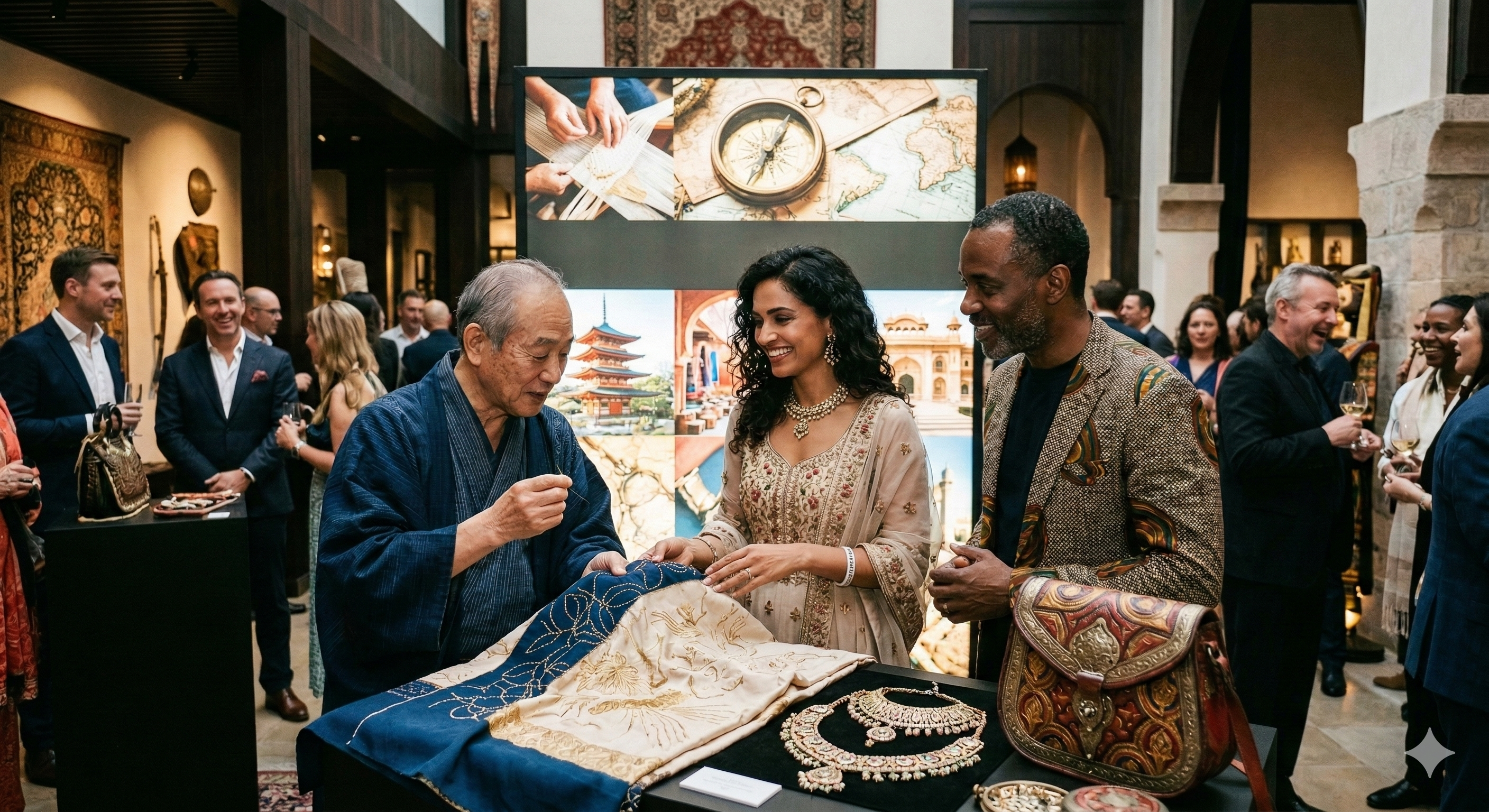
Image generated with AI
Digital at the Centre
The generational divide is clearest in media behaviour. HNWZ’s influence ecosystem centres on Instagram, YouTube, TikTok and community-led content. They trust cultural relevance over corporate messaging, social proof over institutional authority, community narratives over brand declarations.
For luxury maisons, this represents strategic reorientation, not marketing adjustment. Digital is no longer an amplification layer – it’s where meaning is negotiated and legitimacy is earned.
Sustainability as Prerequisite
Another decisive differentiator between HNWZ and previous affluent cohorts is the role of sustainability. The report indicates a majority of HNWZ respondents actively factor sustainability into luxury decisions. They’re significantly more open to second-hand, resale and circular luxury models. Ethical ambiguity increasingly undermines brand credibility.
For this generation, sustainability is not an emotional addition. It’s a prerequisite for trust. Brands treating it as a communication exercise rather than an operating principle risk early disqualification.
Beyond the Wealth Transfer Narrative
Much industry commentary frames Gen Z through the lens of the “great wealth transfer”. Altiant’s data introduces a critical correction. Whilst most HNWZ respondents expect inheritance, it’s often 10 to 20 years away. Waiting for capital transfer to initiate engagement is strategically unsound.
Luxury loyalty forms early and, once formed, proves remarkably resilient.
Strategic Imperatives
The emergence of HNWZ calls for recalibration of long-held assumptions. Five imperatives stand out: engage before ownership, prioritise desirability alongside exclusivity, design tiered luxury pathways rather than linear ladders, embed sustainability structurally, and treat digital culture as core infrastructure.
This isn’t a call to dilute luxury, but to future-proof it.
Luxury’s advantage has always been its ability to think in decades, not quarters. HNWZ represents a generational inflection point – one that rewards brands willing to invest in relevance long before revenue.
The future of luxury will not be claimed at the moment of inheritance. It will belong to the brands that earned trust, meaning and cultural permission years earlier.
This article is based on insights from the Altiant HNWZ Report, 2025.
Abhay Gupta is a luxury strategist and Founder & Chairman of Luxury Connect Pvt Ltd. He is widely recognised as a luxury expert by CNBC, CNN, NDTV Profit, Business India, Economic Times and has established luxury brands like Versace, Versace Home, Versace Collection, Corneliani, John Smedley, Tween Damat ADV, Arredo Classic into the Indian market. A regular speaker at many luxury forums, the Fondazione Altagama has also recognised his contribution to the growth of Italian luxury industry by his pioneering efforts in India. Abhay is also the author of the book ‘The Incredible Indian Luxury Bazaar.’
The newly released WeChat Luxury Index examines how high-end and luxury brands achieve marketing or business objectives on WeChat. The report also showcases a ranking of these brands, evaluating whether their offerings and services on WeChat are developed enough to meet the sophisticated demands of today’s consumers.
In an exclusive interview for The Luxury Society Podcast’s inaugural episode, TAG Heuer CEO Antoine Pin reveals how the brand’s historic return to Formula 1 aims to conquer new markets, seduce younger consumers, and win the ultimate battle: The one for our wrists.
The traditional pillars of luxury – rarity, exclusivity, and artisanal craft are giving way to a new currency. For decades, the industry was defined by the tangible: the precise stitch, the rare skin, the silent atelier. That is no longer enough. As houses such as Louis Vuitton and Dior demonstrate, the industry has shifted from selling objects to brokering cultural capital, and for the modern consumer, luxury is less defined by what one possesses than by the cultural space one inhabits.
After years of volatility, China’s luxury sector has reached a critical inflection point where growth through market expansion alone is no longer viable – brands must now compete through innovation and operational excellence
“Luxury in India was never just worn – it was lived.” India’s luxury landscape extends far beyond fashion and accessories. From heritage hospitality to wellness rituals and artisanal craft, the country’s affluent consumers have long embraced a holistic interpretation of prestige that global brands are only beginning to understand.