The Segment of One: Hyper-Personalisation in the Luxury Industry
Luxury’s traditional “white glove” service faces a digital crisis. As technology democratises personalisation, heritage brands must leverage AI and real-time data to anticipate individual needs or risk losing their premium positioning to more digitally savvy competitors.
The traditional “white glove” service, once the exclusive domain of physical boutiques, must now be replicated and scaled digitally without losing its aura of exclusivity. The reality is that technology continues to democratise all aspects of the customer experience; when a new entrant or mass-market brand can offer better personalisation than a high-end Luxury Maison, customers begin to notice. This is the era of hyper-personalisation, a strategy that moves beyond broad demographic segmentation to treat every customer as a singular, evolving entity.
Hyper-personalisation leverages real-time data, Artificial Intelligence (AI), and predictive analytics to tailor content, products, and experiences to an individual’s immediate context and intent. According to McKinsey, 71 per cent of consumers now expect personalised interactions, and companies that excel at it generate 40 per cent more revenue than their peers. This is no longer an option, but a competitive necessity.
The Strategic Imperative: Why Hyper-Personalisation?
The luxury consumer is “time-poor, individualistic, empowered, and connected”. They demand that digital interactions possess the same level of intimacy and anticipation as a seasoned concierge.
The Expectation Gap: While according to Salesforce, 73 per cent of customers expect brands to understand their unique needs and treat them as individuals, only a third of brands currently meet these expectations.
The Revenue Driver: According to multiple independent studies, hyper-personalisation is proven to reduce customer acquisition costs by up to 50 per cent and increase marketing ROI by 10-30 per cent. It shifts the metric from simple conversion to Customer Lifetime Value (CLV), fostering “brand intimacy” that drives long-term loyalty.
Competitive Differentiation: In a crowded digital market, brands like Gucci and Louis Vuitton are using AI to differentiate not just through product, but through service precision, predicting needs before they are articulated.
Core Management Decisions
To enable this capability, leadership must make three fundamental strategic shifts:
From Data Silos to a Unified Customer DNA
Management must mandate the dissolution of data silos. A luxury brand cannot recognise a VIP client if their e-commerce data, in-store clienteling notes, and social media interactions are disconnected.
The Decision: Invest in a Customer Data Platform (CDP) to create a “Golden Record” or “360-degree view” of the customer. This unifies first-party data (transactions), zero-party data (preferences shared voluntarily), and behavioural signals into a single, accessible profile.
The Goal: Enable Identity Resolution, stitching together fragmented user behaviours across devices to ensure that the customer browsing handbags on an iPad is recognised as the same high-net-worth individual walking into the Paris flagship.
From Reactive Service to Predictive Anticipation
Traditional luxury service waits for the client to ask. Hyper-personalisation anticipates.
The Decision: Shift investment from static analytics to Predictive AI and Machine Learning (ML).
The Application: Use ML to forecast “micro-decision points.” For example, Burberry uses predictive analytics to optimise inventory and personalise product recommendations, while Estée Lauder uses AI to predict skincare needs, effectively acting as a digital beauty adviser.
The Benchmark: Move towards “Agentic AI”, autonomous systems that can plan travel itineraries or manage complex shopping requests with minimal human intervention, as seen in emerging travel trends.
From Mass Content to Generative Scale
Luxury demands high aesthetic standards, which historically limited the volume of personalised content a brand could produce.
The Decision: Integrate Generative AI into the creative workflow.
The Application: Use GenAI to dynamically assemble content-tailoring imagery, copy, and offers for specific individuals at scale. Gucci uses generative AI to assist designers and create hyper-personalised marketing campaigns that resonate with specific cultural and aesthetic preferences of different demographics.
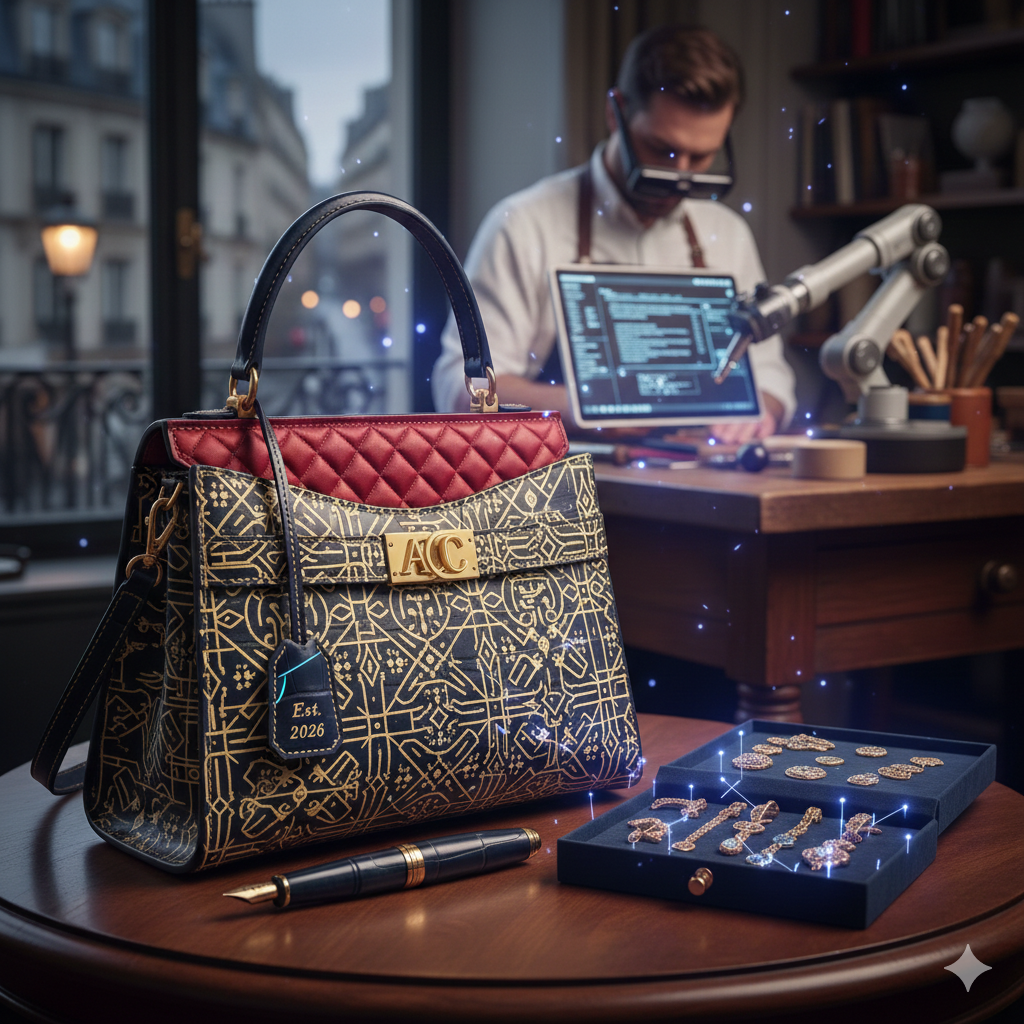
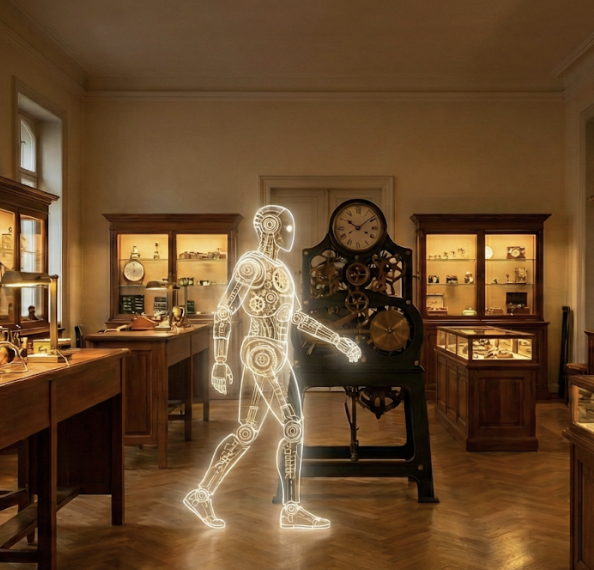
Image generated with AI
Execution Roadmap: A Phased Approach
Implementing hyper-personalisation is a journey of data maturity. Executives should follow a phased roadmap to mitigate technical debt and ensure adoption.
Phase 1: Foundational Intelligence
Action: Implement a CDP to unify data streams from CRM, POS, and web analytics.
Focus: Collect Zero-Party Data. Encourage customers to share preferences (e.g., skin concerns, style icons) in exchange for better service. This builds trust and data accuracy.
Example: Chanel’s Lipscanner app launched in 2021 and virtual makeup try-on use computer vision to match shades, collecting preference data while providing utility.
Phase 2: Algorithmic Deployment
Action: Deploy MLOps (Machine Learning Operations) to manage and scale AI models. Automate A/B testing to refine recommendations continuously.
Focus: Implement Visual Search and Product Recommendations. Allow users to upload photos to find matching products, a strategy used effectively by Louis Vuitton to simplify discovery.
Example: Revolve and Zalando has been experimenting with generative AI-powered shopping assistants to curate product discovery.
Phase 3: Omnichannel Orchestration
Action: Enable Real-Time Interaction Management (RTIM). The system must react in milliseconds to customer behaviour (e.g., a cart abandonment or a store entry).
Focus: Digital Clienteling. Equip store associates with AI-driven insights via tablets, allowing them to see a client’s online wish list and predictive fit scores during a physical appointment in store.
Example: Burberry’s social retail store in Shenzhen integrates WeChat interactions with physical store exploration, rewarding engagement with social currency.
Risk Management & Governance
Hyper-personalisation in luxury carries specific risks. The “uncanny valley” effect is undesirable and fatal to brand equity.
The Personalisation-Privacy Paradox
Brand Dilution vs. Exclusivity
Algorithmic Bias
Conclusion
For the luxury industry, hyper-personalisation is the bridge between heritage and the future. However, it does not come without risk. In an industry where the human touch and inter-personal interactions are fundamental, it is vital that Luxury brands do not cede total control to AI. Rather, AI empowers the organisation, when properly structured, to serve customer needs more effectively. By investing in a unified data foundation, embracing predictive and generative AI, and governing these powerful tools with strict ethical standards, luxury leaders can turn every digital interaction into a bespoke experience that honours the brand’s legacy of exclusivity.
Dominic Weir is Strategy Director at DLG, parent company of The Luxury Society. Based in Geneva, Dominic previously held senior positions at Richemont.
The newly released WeChat Luxury Index examines how high-end and luxury brands achieve marketing or business objectives on WeChat. The report also showcases a ranking of these brands, evaluating whether their offerings and services on WeChat are developed enough to meet the sophisticated demands of today’s consumers.
In an exclusive interview for The Luxury Society Podcast’s inaugural episode, TAG Heuer CEO Antoine Pin reveals how the brand’s historic return to Formula 1 aims to conquer new markets, seduce younger consumers, and win the ultimate battle: The one for our wrists.
At the WEF 2026, the conversation shifted from AI principles to implementation. With DLG’s LuxuryIQ MCP, luxury brands can finally bridge the gap between fragmented data sources and strategic intelligence – transforming how they compete in an AI-driven market.
AI promises to transform luxury, yet most brands remain stuck experimenting. The bottleneck isn’t technical capability – it’s organisational inertia. Fragmented teams, outdated structures, and misaligned metrics prevent companies from translating AI insights into action.