Hublot’s Bold Rebalancing: How Julien Tornare Is Steering the Disruptive Watchmaker Through Industry Headwinds
As luxury watchmakers navigate uncertainty and market contraction, Hublot’s CEO outlines a strategic recalibration that trades marketing reach for emotional resonance – prioritising community cultivation and authentic experiences over sponsorship ubiquity
As LVMH Watch Week convenes in Milan, Julien Tornare brings a fresh strategic vision to Hublot in his role as Chief Executive – a position he assumed in September 2024 during one of the watch industry’s most challenging periods in recent memory. The Swiss watchmaker, known for its audacious marketing moves and technical innovations, now navigates a landscape characterised by what Tornare describes candidly as “uncertainty”: a watch industry digesting years of pandemic-era excess whilst confronting geopolitical instability, China’s domestic market contraction, and the fundamental question of how luxury brands justify their value propositions during economic recalibration.
Speaking on a recent episode ofThe Luxury Society Podcast, Tornare offered insights into how Hublot is addressing these challenges – not through retreat, but through strategic rebalancing that honours the brand’s disruptive DNA whilst acknowledging new market realities. His perspective illuminates a broader tension facing luxury brands: how to maintain bold differentiation during conservative times, and how to create genuine emotional connections in an increasingly artificial world.
Rebalancing the Emotional Drivers
Hublot’s strategic evolution begins with a frank reassessment of its marketing portfolio. The brand that dared to enter football when it was considered a “popular sport, not very luxury oriented” has decided to step back from its FIFA World Cup and Premier League sponsorships – not as retreat, but as reallocation toward a more balanced emotional strategy.
“The downside is that we went so much into football that we cannot be only football,” Tornare explains. “By being so much into European football, we forgot a bit about some other presences we had in different markets, especially in the US where soccer resonates less than other sports.”
This acknowledgment reflects sophisticated understanding of luxury’s fundamental proposition. “At the end of the day, what drives the desire of the consumer is something emotional and something irrational,” Tornare notes. “We don’t sell goods that are a necessity. We sell emotion, so you need to create emotion.”
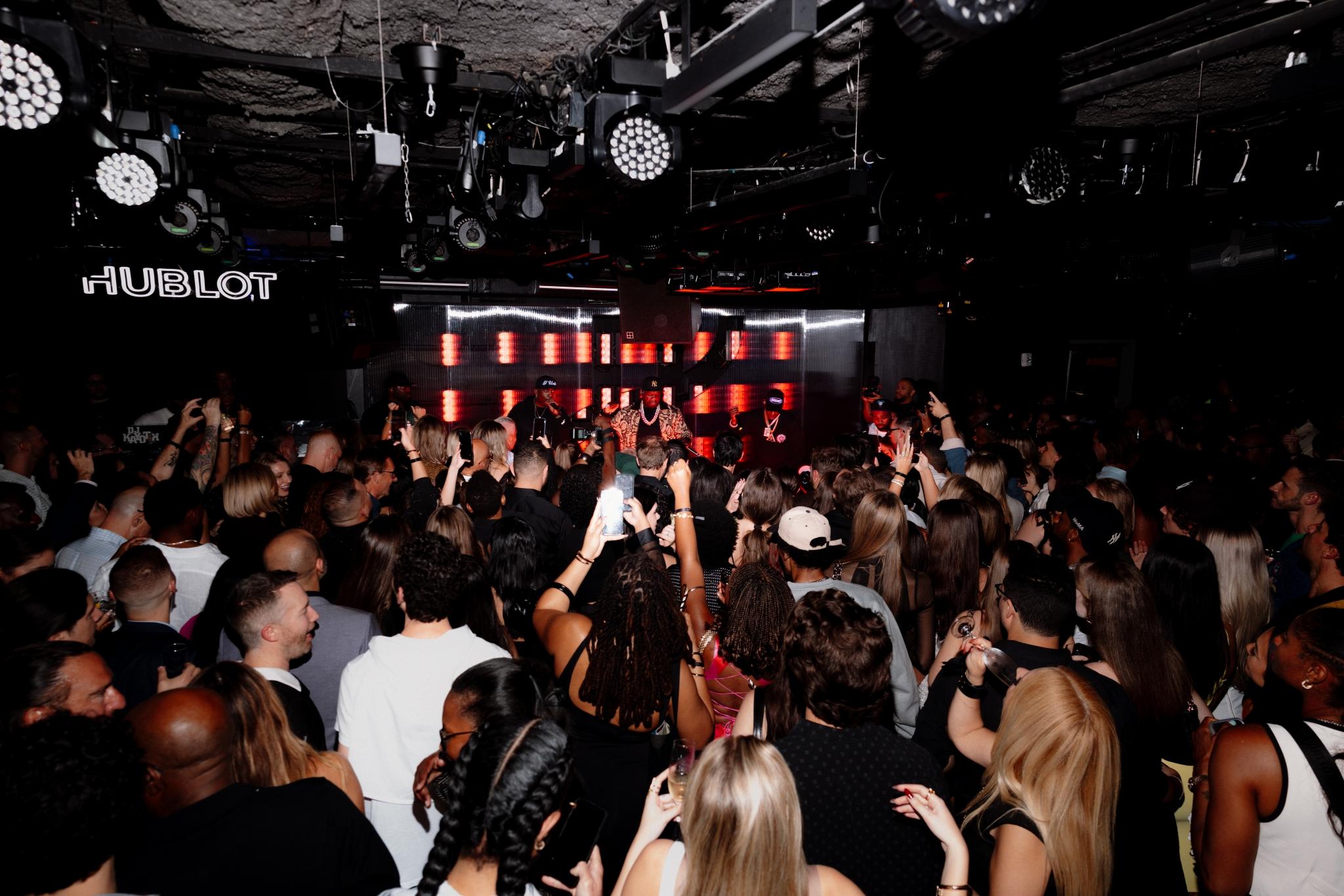
The repositioning maintains Hublot’s football presence through Champions League, Europa League, and ambassador Kylian Mbappé, whilst creating capacity to invest in music and art activations that generate what Tornare calls “money can’t buy experiences.” He cites a recent Miami event featuring 50 Cent performing for Hublot clients: “Many people came to me during the night or after telling me, ‘We love Hublot. We love other brands as well, but the night you offered to us privately in such an environment is one of the best moments of the year, and I’m so happy to have lived this thanks to Hublot.'”
This experiential approach has a measurable impact on brand loyalty. For Hublot, these activations create community belonging that transcends transactional relationships – a particularly valuable asset during periods when discretionary spending faces pressure.
Hublot Miami event with 50 Cent Credit: Hublot
Geographic Strategy and Local Communities
Hublot’s geographic expansion reveals similar strategic sophistication, with targeted investments in India, South Korea, Indonesia, and Malaysia balanced against community cultivation in traditional European markets.
India represents a particularly compelling opportunity. “I’ve been in the industry for 28 years, and since I started, I was always hearing that India would be the next China,” Tornare reflects. “But when I joined Hublot and went on my first trip in India a few months ago, I realised India is finally ready.”
According to DLG’s proprietary data tools, search demand for Hublot in India grew by 30.7% year-on-year between 2024 and 2025 – a marked leap up from the year before, which only saw growth of 1.3%. “From our research, we see that over 80% of searches were general brand searches, which suggests strong brand recognition but less specific product knowledge,” says Dominic Weir, Strategy Director at DLG. “However, a 56% year-on-year uplift in product searches of the Big Bang collection has been recorded in 2025, that product momentum is slowly building, which can be capitalised on as Indian consumers become more sophisticated in their luxury watch knowledge and begin seeking specific collections rather than just brand names.”
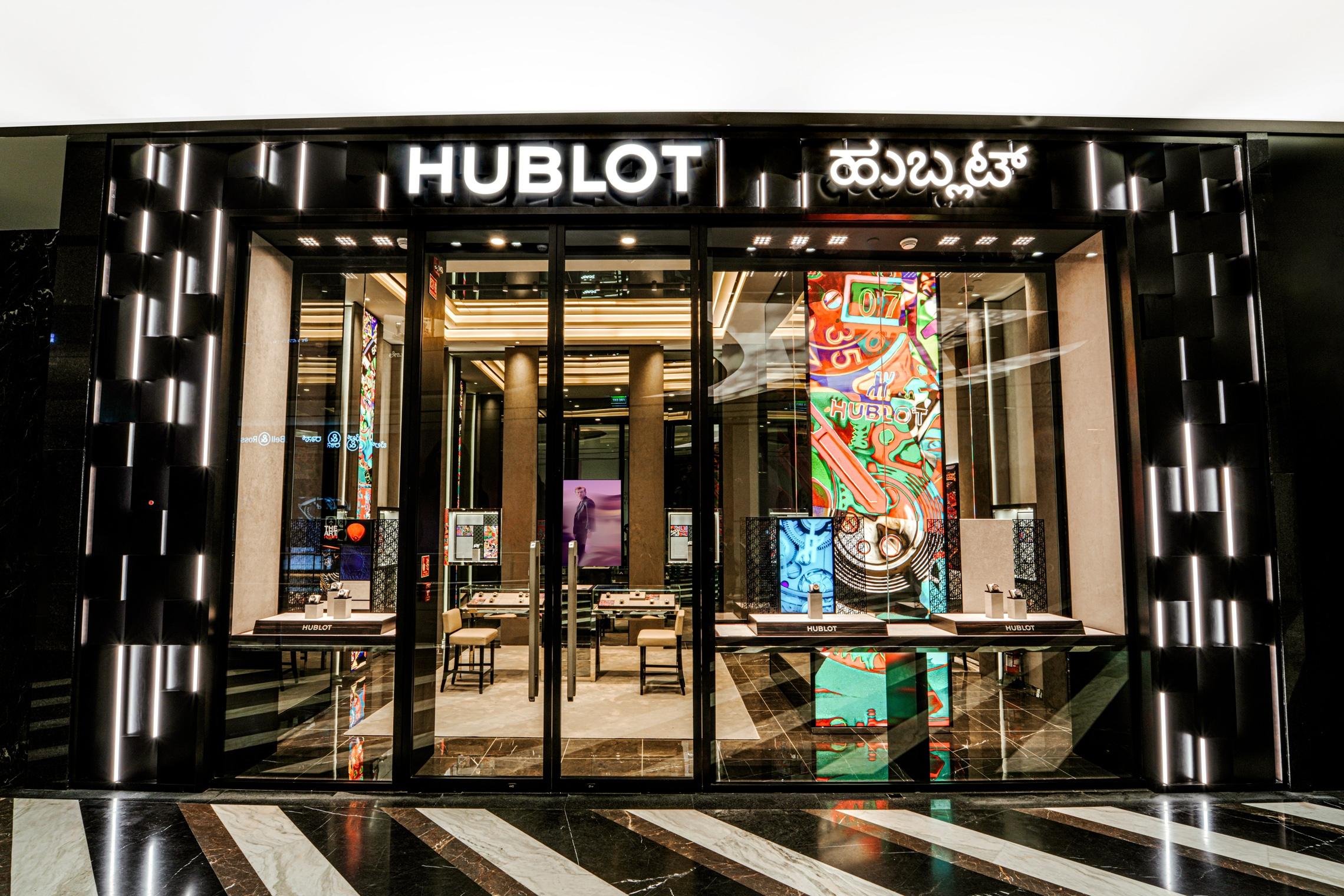
Hublot currently operates boutiques in Mumbai and Bangalore, with Delhi expansion planned – positioning the brand ahead of competitors who delayed India investment. This early-mover advantage proves increasingly valuable as the market develops: according to the Federation of the Swiss Watch Industry, Swiss watch exports to India grew 25% in 2024, significantly outpacing growth in traditional markets like the US, Japan, and South Korea.
Yet geographic expansion alone is insufficient. Tornare emphasises local community activation as the foundation for sustainable market presence. “In Europe, our focus would be more on our local clientele and how we activate these local communities,” he explains. “Hublot, with the Hublotista – it’s our responsibility today to continue to capitalise on this community.”
This community-first philosophy extends across all markets with consistent guidance: “Never count on tourist flows to do your business in the market. Improve yourself on local clients, the rest will come.”
Hublot Bangalore Boutique Credit: Hublot
AI, Innovation, and Human Authenticity
Perhaps the most intriguing dimension of Hublot’s evolution involves the apparent paradox between technological adoption and human-centric experiences. Tornare has embraced artificial intelligence as a strategic tool whilst simultaneously intensifying the brand’s focus on authentic human connections – a balancing act that luxury brands across sectors are now attempting to navigate, as shown in the recent The State of AI in Luxury study conducted by DLG and Europa Star.
“A couple of weeks ago, I was in a plane, and I started to create a watch with AI to have a rendering of a certain watch with certain materials, add some stones and things, and I was like, okay, that’s cool – I can do it myself,” he recounts, reflecting that in the past, he would have to go through the product department for the same output. This personal AI adoption extends beyond design sketches to strategic thinking: “When it’s a design, when it’s a marketing idea, I will definitely use AI to give me a first opinion. Am I right? Am I not right? Why would you do this?”
Yet Tornare maintains crucial scepticism. “Keep your critical mindset. Don’t take it for granted, because then you might make quite a lot of mistakes,” he cautions. “Today, I could bluff you with a theory on nuclear physics, just going on AI on my cellphone. You have to be careful, staying who you are, with your own knowledge.”
This balanced approach – embracing AI’s capabilities whilst maintaining the human touch – reflects what he sees as a fundamental consumer need: “In today’s world, I think people need also now to have real experiences and to enjoy just with your heart, with your soul.” This is a sentiment echoed by several other watchmaking executives, including Audemars Piguet’s Ilaria Resta, who highlighted the need for physical experiences in an increasingly digital world, in an earlier episode of The Luxury Society Podcast.
The new manufacturing facility opening later this year embodies this philosophy. Beyond expanded production capacity, the facility features a 400-square-metre customisable experience centre. “If you guys want to celebrate your birthday at Hublot, I’ll be able to turn this 400-square-metre room into the best birthday party place you can imagine,” Tornare promises. “You’ll be able to play a football match if you want, play piano with Lang Lang if you want – it’s going to be totally customisable.”
This positioning as “the best hospitality and experience tool in the watch industry” represents strategic differentiation at a moment when authentic human connection carries premium value. Hublot’s facility aims to deliver these interactions at unprecedented scale, transforming manufacture visits from educational tours into memorable personal experiences.
The facility also emphasises technical credentials that risk being obscured by marketing prowess. “Hublot is also a fantastic watchmaker, and this we should never forget,” Tornare insists. “The watchmaking aspect of Hublot will be put on stage like in no other visit you could have done with the brand.”
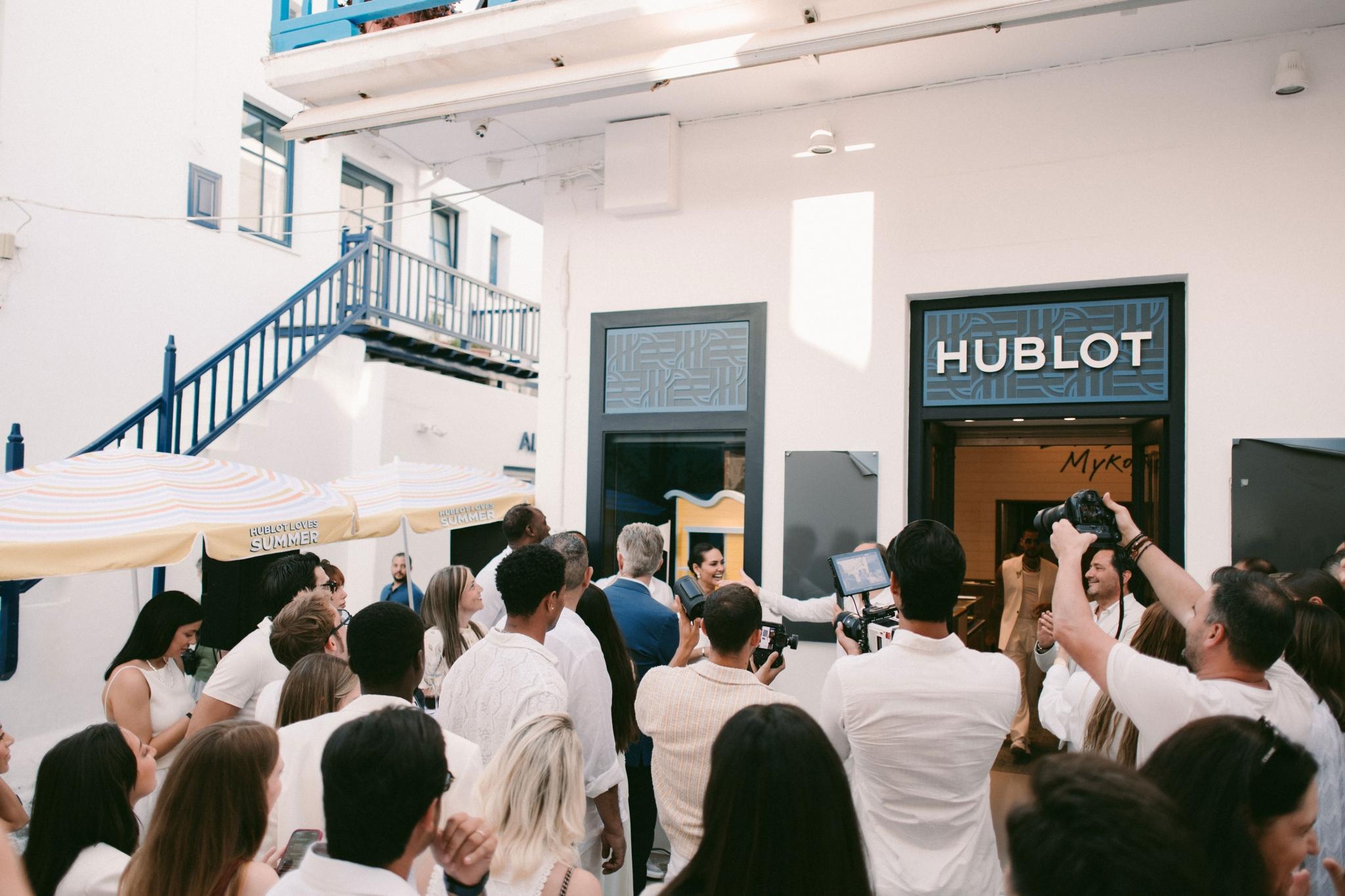
Hublot Summer Tour Mykonos Credit: Hublot
Navigating Forward
As 2026 unfolds, Tornare acknowledges the industry’s uncertain trajectory whilst maintaining cautious optimism grounded in fundamentals. “What characterises today is uncertainty,” he states frankly. “We really don’t know what will be the next month – it depends so much on the global political context, obviously impacting a lot on the economic context.”
Yet this uncertainty has not put a dampener on Tornare’s outlook. “I’m working on making the brand shine more than ever in the next couple of years, but I’m also working on the fundamentals of the business to be careful,” he explains. “I will push hard on the brand to develop in the next few years as if the sky was totally blue, but I’m also ready to press the emergency buttons in case bad things happen in the world.”
Subscribe to The Luxury Society Podcast to receive notifications about new episodes featuring luxury industry leaders. Never miss an episode as we continue exploring the themes shaping the future of luxury.
Lydianne is a seasoned marketing and communications professional with over a decade of experience in the luxury industry. Having spent six years in Shanghai, she also has a deep understanding of China’s evolving luxury landscape. Currently Global Marketing & Communications Director at DLG, she previously led marketing efforts for DLG China. Before that, she honed her editorial expertise at Prestige in Singapore and later as China Editor of Luxury Society.
The newly released WeChat Luxury Index examines how high-end and luxury brands achieve marketing or business objectives on WeChat. The report also showcases a ranking of these brands, evaluating whether their offerings and services on WeChat are developed enough to meet the sophisticated demands of today’s consumers.
In an exclusive interview for The Luxury Society Podcast’s inaugural episode, TAG Heuer CEO Antoine Pin reveals how the brand’s historic return to Formula 1 aims to conquer new markets, seduce younger consumers, and win the ultimate battle: The one for our wrists.
While LVMH reported declining revenues and the Swiss watch industry contracted in 2025, Bulgari CEO Jean-Christophe Babin delivered record results across jewellery, watches, and hotels – revealing why passion and market share gains matter more than market conditions.
With 34% sales growth, a younger customer base, and an unwavering commitment to sustainability, the Swedish electric carmaker is proving that challenger brands can thrive in a market dominated by legacy giants
Whilst major watch groups struggle with market uncertainty, Switzerland’s independent watchmakers are thriving – and H. Moser & Cie’s remarkable transformation reveals precisely why