FOBO: Why the Luxury Industry’s Fear of Becoming Obsolete Is the Only Fear Worth Having
FOMO is out. FOBO – the Fear of Becoming Obsolete – is the defining anxiety of our professional moment. For an industry built on permanence, heritage, and the primacy of the human hand, it may also be the only fear worth taking seriously.
The question confronting luxury executives today is no longer whether artificial intelligence will transform their industry. The question is whether the industry will transform in time and whether those at the helm understand the difference between using AI and truly leveraging it.
It was this tension that animated a recent bonus episode of The Luxury Society Podcast, in which DLG Strategy Director Dominic Weir joined host Robin Swithinbank and DLG Founder and CEO David Sadigh for a candid, and at times disquieting, conversation about artificial intelligence and its growing impact on luxury. The episode surfaced an argument that luxury brands would do well to sit with: the gap between those who understand what AI can actually do and those who merely believe they do is widening – quickly, and at considerable competitive cost.
The Intelligence Gap: What AI Actually Does in Luxury
The popular conception of AI in business still tends toward the cosmetic: chatbots, copywriting, the occasional image generator. What Weir describes is something considerably more purposeful. At DLG, AI is being deployed to reverse-engineer competitor marketing calendars, interrogate grey market dynamics, and analyse pre-owned pricing signals in real time. To test the validity of this existential dread, Weir took a provocative step: building what he describes as “Digital Twins” of the corporate hierarchy – agents that simulate the roles of Chief Commercial Officer (CCO) and Chief Marketing Officer (CMO) within a luxury organisation. Pointed at DLG’s LuxuryIQ MCP and proprietary datasets, the output was, in his own words, unnervingly sharp – strategically competitive enough to act as a formidable counterpart to any human executive. The strategic resonance raises what might be referred to as a “gedankenexperiment”: if AI can derive commercially relevant insights across the entire value chain, what happens to the industrial-age silo of the Executive Committee?
The distinction matters more than it might first appear. For example, generic AI can tell you that Rolex is popular in a given market. A platform built on proprietary luxury data, such as LuxuryIQ MCP, can tell you why the Submariner is underperforming in the Middle East this quarter, what the pricing implications are, and what shifts in consumer taste might explain the divergence. The AI engine, in other words, is increasingly a commodity. The intelligence layer beneath it is the differentiator. As Sadigh puts it: “Everyone has the same AI engine – the same pair of eyes. But what you see really depends on where you stand.”
This is not a philosophical point. It has quantifiable consequences. According to The State of AI in Luxury, the first comprehensive AI survey of the sector, conducted by DLG in partnership with Europa Star, 71% of luxury executives acknowledge that AI adoption cannot be delayed, yet 42% remain stuck in experimentation. The global AI market in luxury, valued at USD 1.2 billion in 2024, is projected to reach USD 5.6 billion by 2034, a compound annual growth rate of 16.2%. The gap between those investing in the intelligence layer and those still evaluating generic tools is already measurable — and widening.
Image generated with AI
The Eroded Pathway: What We Lose on the Way Up
The more uncomfortable dimension of this shift concerns not efficiency, but erosion. As agentic AI absorbs the middle layer of organisations – the junior analyst, the research coordinator, the associate tasked with building the first draft of a strategy – it does not merely accelerate output. It dismantles the apprenticeship model through which professional judgement has historically been formed. Entry-level roles have never existed solely to produce work; they exist to produce people capable of doing more complex work later. That pipeline is now under structural pressure. “Many of the functions are white-collar type of jobs that require a lot of manual work,” Sadigh observes. “People spending 30%, 50% of their time in meetings, giving orders to middle managers — this is going to change.”
The macro data reflects this structural shift in stark terms. Workforce intelligence firm Revelio Labs, which tracks over 100 billion employment profiles, found that job postings for middle management roles were still 42% below their April 2022 peak as of October 2024 and showed no signs of recovering. McKinsey’s Jobs Lost, Jobs Gained: Workforce Transitions in a Time of Automation report, now a benchmark reference in debates about automation and labour, estimated that between 75 million and 375 million workers globally may need to switch occupational categories entirely by 2030, with the upper end of that range representing roughly 14% of the world’s workforce under the most accelerated adoption scenarios. The specific mechanism drawing the sharpest attention is what happens not to mid-career professionals, but to those who never get the chance to become one. Dario Amodei, CEO of Anthropic, warned in May 2025 that AI could eliminate roughly half of entry-level white-collar positions – roles in finance, consulting, law, and technology – within five years, with overall unemployment potentially reaching between 10% and 20% as a result. Whether or not those numbers prove accurate, the direction of travel is difficult to dispute.
Image generated with AI
The Luxury Paradox: Why AI May Be the Best Thing to Happen to the Industry
There is, however, a reframe worth sitting with. Luxury’s competitive moat is, at its core, irreproducible by machine. A tourbillon movement, a hand-stitched saddle stitch, a bespoke jewel: these are not things that AI generates. They are things that AI, by generating everything else, renders rarer. The mechanical watch has been technically obsolete for decades – accurate timekeeping was surpassed by the quartz movement in the 1970s and rendered redundant as an instrument by the smartphone – yet it has never been more commercially or culturally significant. In a world saturated with synthetic output, that which is indisputably made by human hands commands an ever-increasing premium. Scarcity has always been luxury’s engine. AI may simply be its most powerful accelerant yet.
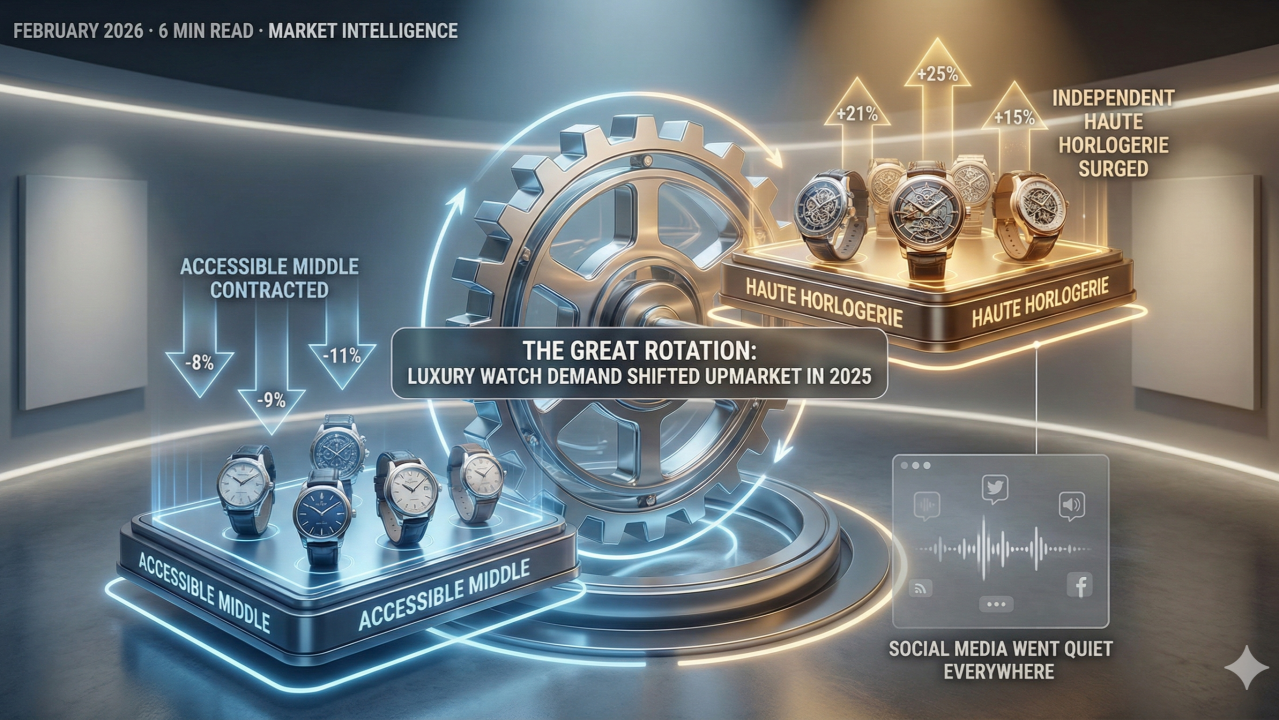
These diverging fortunes are already visible within the market. At the entry and middle price points, pressure is mounting. At the top, the opposite is true. “The entry price point, the entry to the middle has been suffering, but the high end – haute horlogerie – has been strengthening,” says Weir. “What this is going to do is push that upper end. This innovation in terms of handcrafted watchmaking is going to remain very robust and strong.”
The risk lies elsewhere – not in what AI replaces, but in what brands fail to do with it. Heritage culture has a tendency to foster insularity: a confidence in craft so deep that it crowds out curiosity about the customer. Brands that deploy AI only to optimise production while neglecting what it can reveal about consumer behaviour are, in Sadigh’s framing, falling into “luxury FOBO.” “We have some clients that are still focusing on crafting the best watches they can and having generic advertising,” he observes. “We need to better understand who the clients are – why 30% of their clients love contemporary art, and what that means in terms of marketing activation.” The gap between brands doing this and those that are not, he adds, “is widening as we speak.”
Image generated with AI
The Judgment Call
Weir’s Digital Twins are analytically sharp – unnervingly so, he admits, on problems he knows take years of instinct to read correctly. What they could not tell him was whether the grey market data they were interpreting signalled a distribution problem, a brand perception shift, or simply a bad quarter in a single market. The analysis was there. The judgment call was still his to make.
That distinction may be the most important one in the room. Not humans versus AI – that framing is already obsolete – but the capacity to recognise the specific moment when the model hands back the wheel, and the experience to know what to do with it. “If I’ve been in the industry for almost three decades,” Weir says, “I can now develop strategies with a complete picture and much more in-depth thinking.” The question of who builds that depth of judgement next – and how, without the apprenticeship structures that once produced it – has no clean answer. Only the urgency of asking it.
__________________________
Listen to the full conversation with Dominic Weir, David Sadigh and Robin Swithinbank on the bonus episode of The Luxury Society Podcast on Apple, Spotify, andother major podcast platforms.
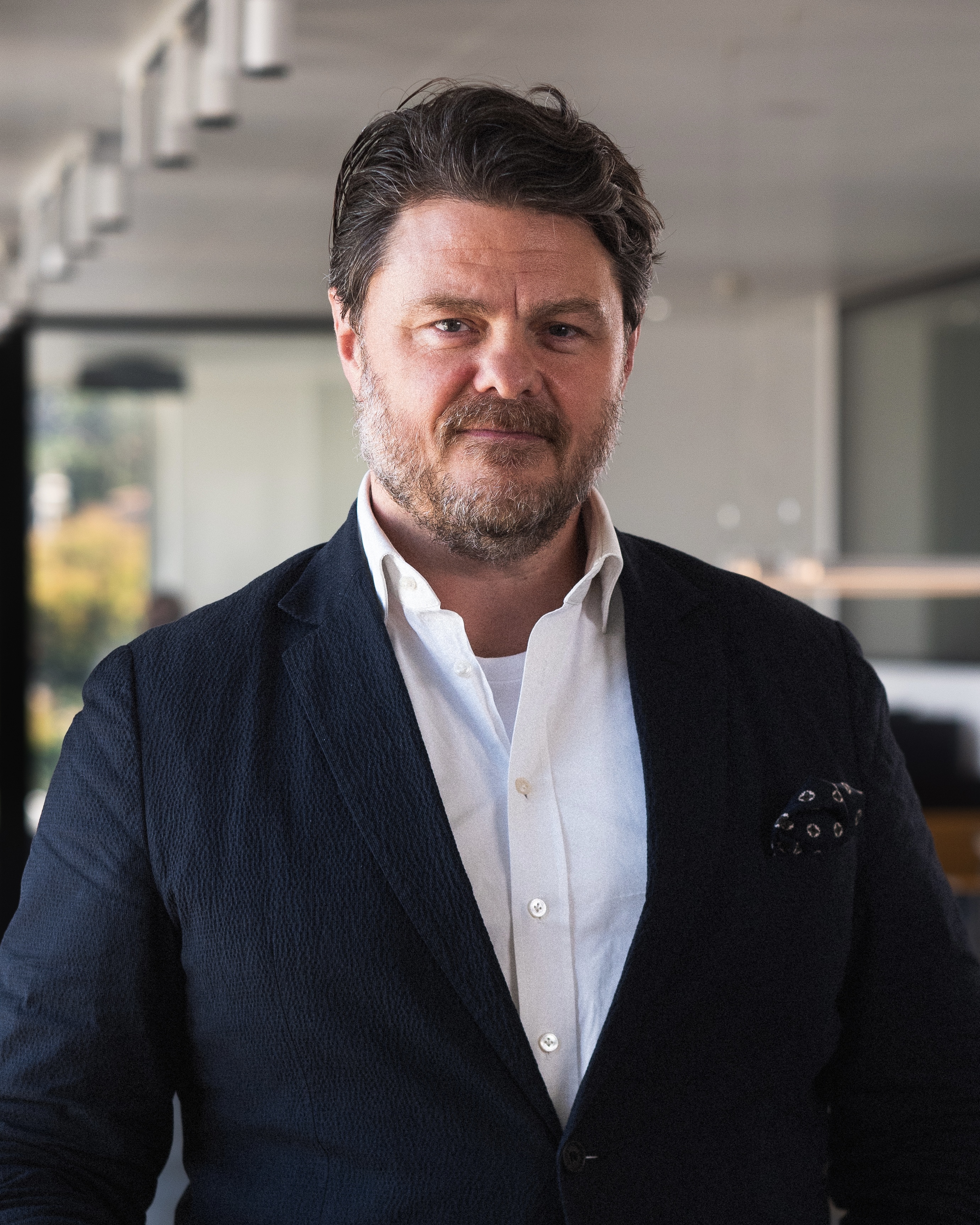
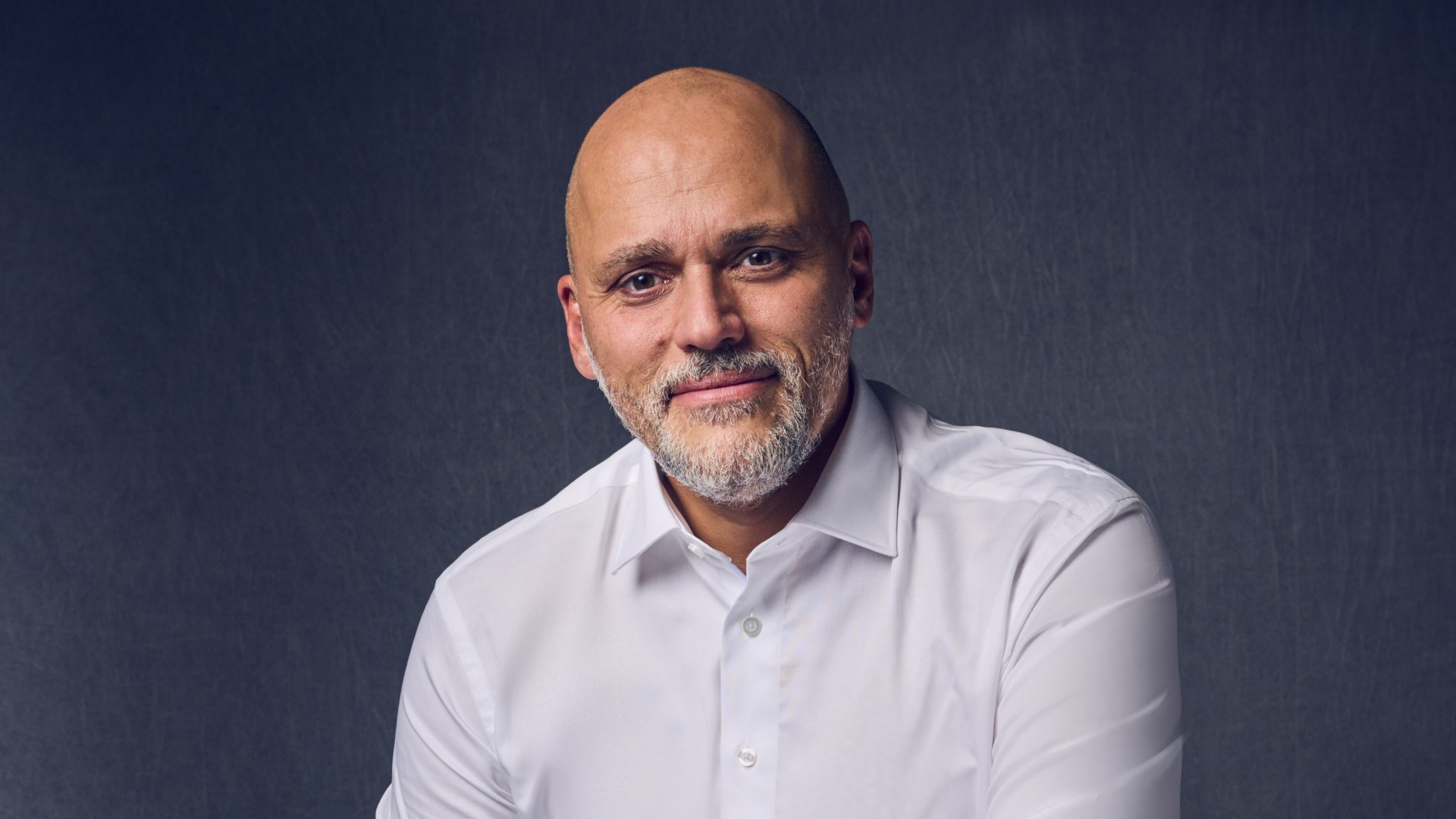
Dominic Weir is Strategy Director at DLG, parent company of The Luxury Society. Based in Geneva, Dominic previously held senior positions at Richemont.
The newly released WeChat Luxury Index examines how high-end and luxury brands achieve marketing or business objectives on WeChat. The report also showcases a ranking of these brands, evaluating whether their offerings and services on WeChat are developed enough to meet the sophisticated demands of today’s consumers.
In an exclusive interview for The Luxury Society Podcast’s inaugural episode, TAG Heuer CEO Antoine Pin reveals how the brand’s historic return to Formula 1 aims to conquer new markets, seduce younger consumers, and win the ultimate battle: The one for our wrists.
At the WEF 2026, the conversation shifted from AI principles to implementation. With DLG’s LuxuryIQ MCP, luxury brands can finally bridge the gap between fragmented data sources and strategic intelligence – transforming how they compete in an AI-driven market.
Luxury’s traditional “white glove” service faces a digital crisis. As technology democratises personalisation, heritage brands must leverage AI and real-time data to anticipate individual needs or risk losing their premium positioning to more digitally savvy competitors.