As artificial intelligence reshapes luxury globally, India’s brands face a defining question: Can technology amplify tradition without erasing its essence?
Luxury, at its core, is human. It is the artisan’s touch, the emotional resonance of heritage, the story whispered through fabric, stone, or scent. In India, this is magnified – where karigari isn’t just craftsmanship, but cultural legacy.
As global luxury houses embed AI across touchpoints – from predictive personalization to virtual styling – Indian brands now stand at a pivotal juncture: Can we adopt AI without diluting our essence? Can algorithms complement our ancestry?
This is not just a technological question; it is a strategic cultural imperative. Because in India, unlike anywhere else, luxury is less about logic and more about legacy.
Why Luxury Needs a Different AI Vocabulary
AI has transformed fashion retail – enabling dynamic pricing, personalized recommendations, and generative design. But luxury is not retail.
In luxury, less is more. The goal isn’t efficiency – it’s emotional immersion. A perfectly coded experience still risks failure if it lacks feeling.
The Western luxury world has responded with cautious optimism – Gucci’s AI-driven campaigns, LVMH’s Aura blockchain, Burberry’s generative content. The Indian market, however, carries deeper complexity. Our luxury isn’t built on convenience – it’s built on contradiction: modern aspiration woven with ancient rituals.
Emerging Indian Case Studies: Where AI Meets Artisanal Intelligence
A quiet revolution is underway. Several Indian brands are beginning to explore how AI can enhance elegance – not erase it.
Tanishq – The ‘Rivaahverse’ & AI Clienteling
In 2022, Tanishq launched its Rivaah Polki bridal collection inside a metaverse environment called the “Rivaahverse,” complete with avatar-based interactions and QR-enabled AR try-ons. Customers could virtually adorn heirloom jewellery via WebAR before ever stepping into a store.
Behind the scenes, AI-enhanced CRM tools were used to hyper-personalize outreach – timing bridal collections to key regional dates, language preferences, and even familial customs. The outcome: reduced acquisition costs, increased in-store conversions, and a deeply resonant emotional journey.
Myntra – Generative Design for Private Labels
Myntra has gone beyond styling to algorithmic design. Using Generative Adversarial Networks (GANs), they auto-generate t-shirt styles based on trend data. These AI-designed products have outperformed human-designed counterparts in sales – particularly among Gen Z.
While Myntra is largely mass-market, its application of generative intelligence presents a model Indian luxury could adapt: combining traditional motifs with AI-led ideation to create limited-edition, data-inspired collections.
Tata CLiQ Luxury – Smart Styling & AI Personalization
Tata CLiQ Luxury, in partnership with Vue.ai, has integrated AI to enhance discovery and personalization. Shoppers experience curated feeds, virtual try-ons, and real-time style assistants. The backend algorithm learns from browsing behavior, location, and brand affinity – presenting a quiet but compelling case of AI that listens, not just speaks.
Stylumia – AI for Responsible Design & Demand Forecasting
Bangalore-based Stylumia is perhaps the most sophisticated example of AI with a conscience. By helping fashion brands forecast trends, avoid overproduction, and optimize demand, Stylumia has reportedly helped eliminate 60 million garments from being wasted annually.
For Indian luxury labels that rely on artisan cycles and small-batch production, such predictive tools could align seasonal outputs with consumer desire – while also reducing carbon and emotional fatigue on both sides of the value chain.
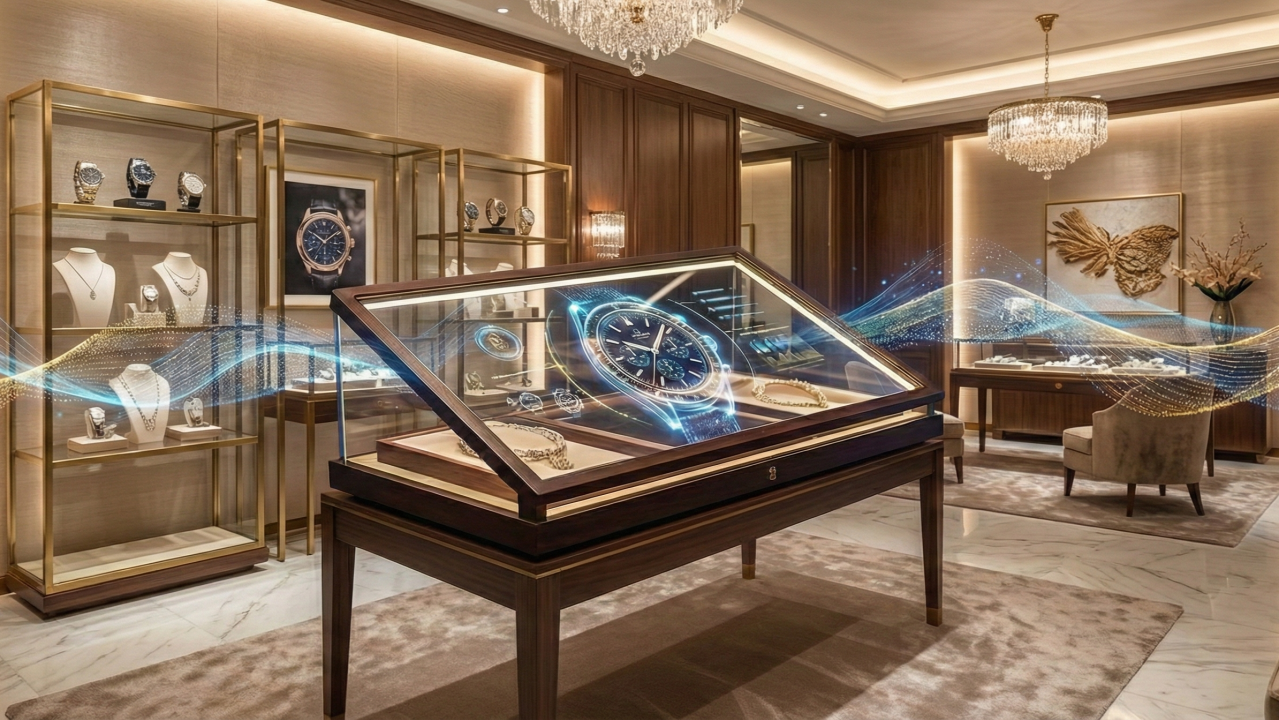
Image generated with AI
A Framework for Indian Luxury: Emotion-First, Tech-Enabled
To succeed with AI, Indian luxury brands must adopt a hybrid strategy that respects the centrality of emotion. Here’s a four-pillar model to guide this evolution:
Cultural Personalization
AI-driven CRM that respects regional rituals, festivals, and familial sentiment.
Augmented Karigari
Use of AI to generate moodboards inspired by Mughal, temple, or tribal designs.
Virtual Emotional Try-ons
AR/VR + AI that helps clients “feel” the product – fabric fall, tone, scale.
Predictive Sustainability
Demand forecasting that aligns with craft production cycles and reduces waste.
Risks & Realities: What Indian Luxury Must Guard Against
While the potential is rich, the pitfalls are real. Over-automation risks commodifying luxury – turning bespoke into banal. Homogenized design from unchecked generative tools may flatten regional aesthetics. Tech fatigue is rising among ultra-HNI consumers who seek discreet human-first service. And AI still struggles to understand cultural subtext and nuanced gestures.
Luxury isn’t simply about offering what’s possible – it’s about curating what’s meaningful.
The Rise of the Luxury Technologist
India needs a new role in the luxury ecosystem: the Luxury Technologist. A hybrid between the karigar and coder, this professional understands both emotion and equation, both code and culture.
Imagine artisans co-creating with AI tools to generate story-led digital assets. Imagine CRM engines trained not just on purchase history, but on puja rituals, family events, or astrological calendars. Imagine supply chains that optimize not just for speed, but for soul.
This isn’t science fiction – it’s the next frontier of Indian luxury.
Strategic Takeaway
In Indian luxury, AI should never automate elegance. It must amplify authenticity.
India’s cultural heritage, artisan wealth, and paradoxical market dynamics offer a unique testbed for AI-powered luxury. But unlike in the West, where innovation leads identity, here it must follow it.
We must build AI systems that do not just understand data – but sense desire. Systems that do not just optimize – but empathize. Because in India, luxury is not a product of logic – it is a performance of soul.
Abhay Gupta is a luxury strategist and Founder & Chairman of Luxury Connect Pvt Ltd. He is widely recognised as a luxury expert by CNBC, CNN, NDTV Profit, Business India, Economic Times and has established luxury brands like Versace, Versace Home, Versace Collection, Corneliani, John Smedley, Tween Damat ADV, Arredo Classic into the Indian market. A regular speaker at many luxury forums, the Fondazione Altagama has also recognised his contribution to the growth of Italian luxury industry by his pioneering efforts in India. Abhay is also the author of the book ‘The Incredible Indian Luxury Bazaar.’
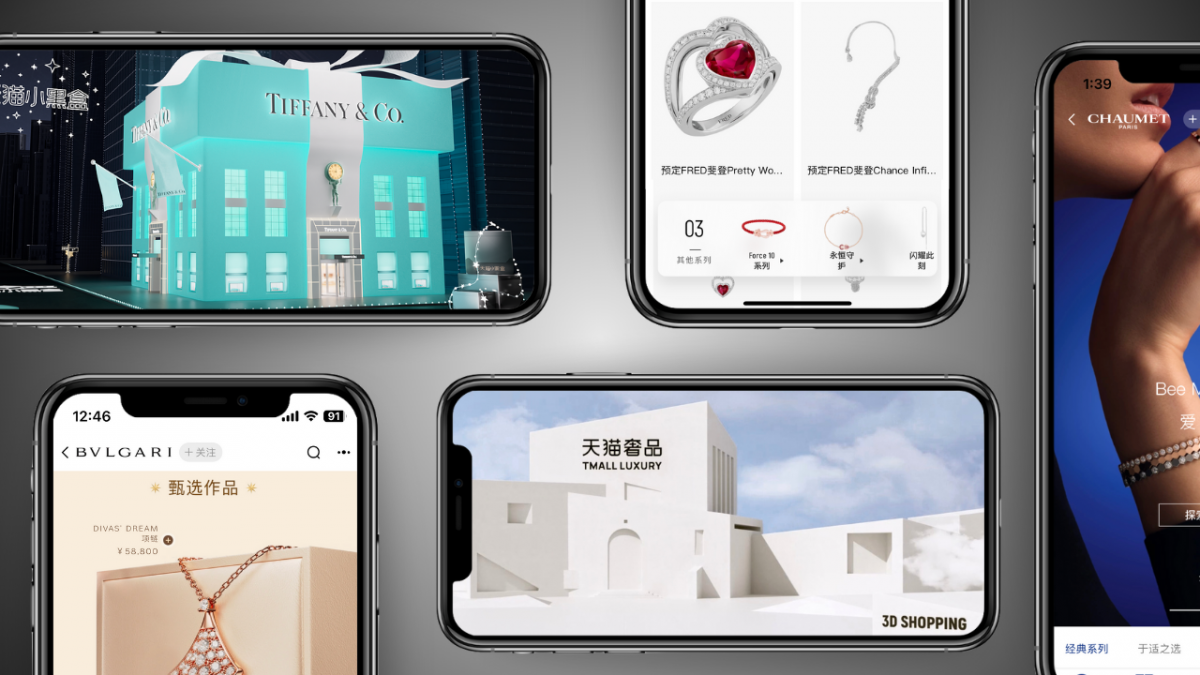
The newly released WeChat Luxury Index examines how high-end and luxury brands achieve marketing or business objectives on WeChat. The report also showcases a ranking of these brands, evaluating whether their offerings and services on WeChat are developed enough to meet the sophisticated demands of today’s consumers.
In an exclusive interview for The Luxury Society Podcast’s inaugural episode, TAG Heuer CEO Antoine Pin reveals how the brand’s historic return to Formula 1 aims to conquer new markets, seduce younger consumers, and win the ultimate battle: The one for our wrists.
At the WEF 2026, the conversation shifted from AI principles to implementation. With DLG’s LuxuryIQ MCP, luxury brands can finally bridge the gap between fragmented data sources and strategic intelligence – transforming how they compete in an AI-driven market.
Luxury’s traditional “white glove” service faces a digital crisis. As technology democratises personalisation, heritage brands must leverage AI and real-time data to anticipate individual needs or risk losing their premium positioning to more digitally savvy competitors.