China’s Luxury Market Reaches Maturity: Why Brands Must Master Innovation and Optimisation to Win
After years of volatility, China’s luxury sector has reached a critical inflection point where growth through market expansion alone is no longer viable – brands must now compete through innovation and operational excellence
The narrative surrounding China’s luxury market has been dominated by dramatic swings: pandemic-era domestic booms followed by sharp post-reopening corrections, all amplified by sensational headlines declaring crisis or recovery. Yet according to Jacques Roizen, Managing Director, China Consulting at DLG, this volatility masks a more fundamental transformation – one that signals not recovery, but maturity.
Speaking on a recent episode ofThe Luxury Society Podcast, Roizen argues that China’s luxury sector has entered a new paradigm where traditional growth strategies no longer suffice. After two decades of explosive expansion, the market has reached its natural ceiling, forcing brands to compete not for new customers, but for market share amongst existing ones. This shift demands capabilities – optimisation, operational excellence, and relentless innovation – that many luxury houses have historically neglected in favour of geographic expansion and brand heritage.
The Normalisation of the China Market
The apparent “recovery” in China’s luxury sector is not what it seems. Whilst major brands reported their first positive quarterly results in years during mid-2025 – with July and August marking the best performance in three years after two years of declines – Roizen cautions against interpreting this as a return to robust expansion. Rather, it represents normalisation after years of distorted figures caused by pandemic-era travel restrictions and their subsequent removal.
“We’re done having a market where luxury consumption by Chinese consumers overseas is growing double digit and luxury consumption by Chinese consumers in China is decreasing double digit,” Roizen explains. “We’re now seeing both of them are going to be flat for the foreseeable future, and that’s what I call the new normal.”
This stabilisation marks China’s luxury market reaching a maturity comparable to established Western markets. According toBain & Company’s 2024 China Luxury Report, the domestic market experienced an 18-20% year-on-year decline in 2024, reverting to 2020 levels. Chinese consumers’ total luxury spending – including purchases made abroad – decreased by approximately 7% overall. Whilst overseas spending recovered significantly, reaching about 50% of 2019 levels in Europe and 120% in Asia-Pacific, this increase could not offset the domestic decline. The firm projects that China’s domestic luxury market will remain flat in 2025 overall, with a challenging first half followed by an improving second half driven by economic stimulus measures, before returning to moderate growth thereafter.
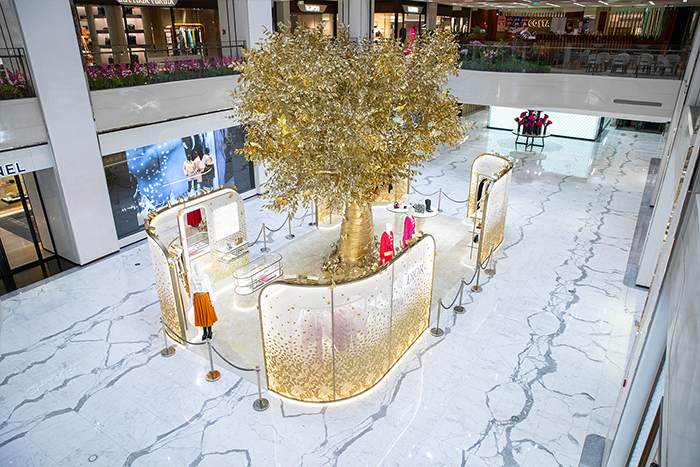
The luxury department store SKP-S Beijing Credit SKP-S
A New Era for Luxury in China
The flattening of China’s luxury market creates an entirely new competitive environment where brands can no longer rely on rising tides to lift all boats. Market share has become the definitive metric of success, forcing companies to outperform competitors rather than simply capture new demographics.
“In the last three years, the losers were losing, so were the winners,” Roizen observes. “Today there’s going to be absolute clarity, because the market is essentially flat. And so now if you want to win, you’re going to have to be a winner. If you’re not a winner, you’re going to see your market share shrink.”
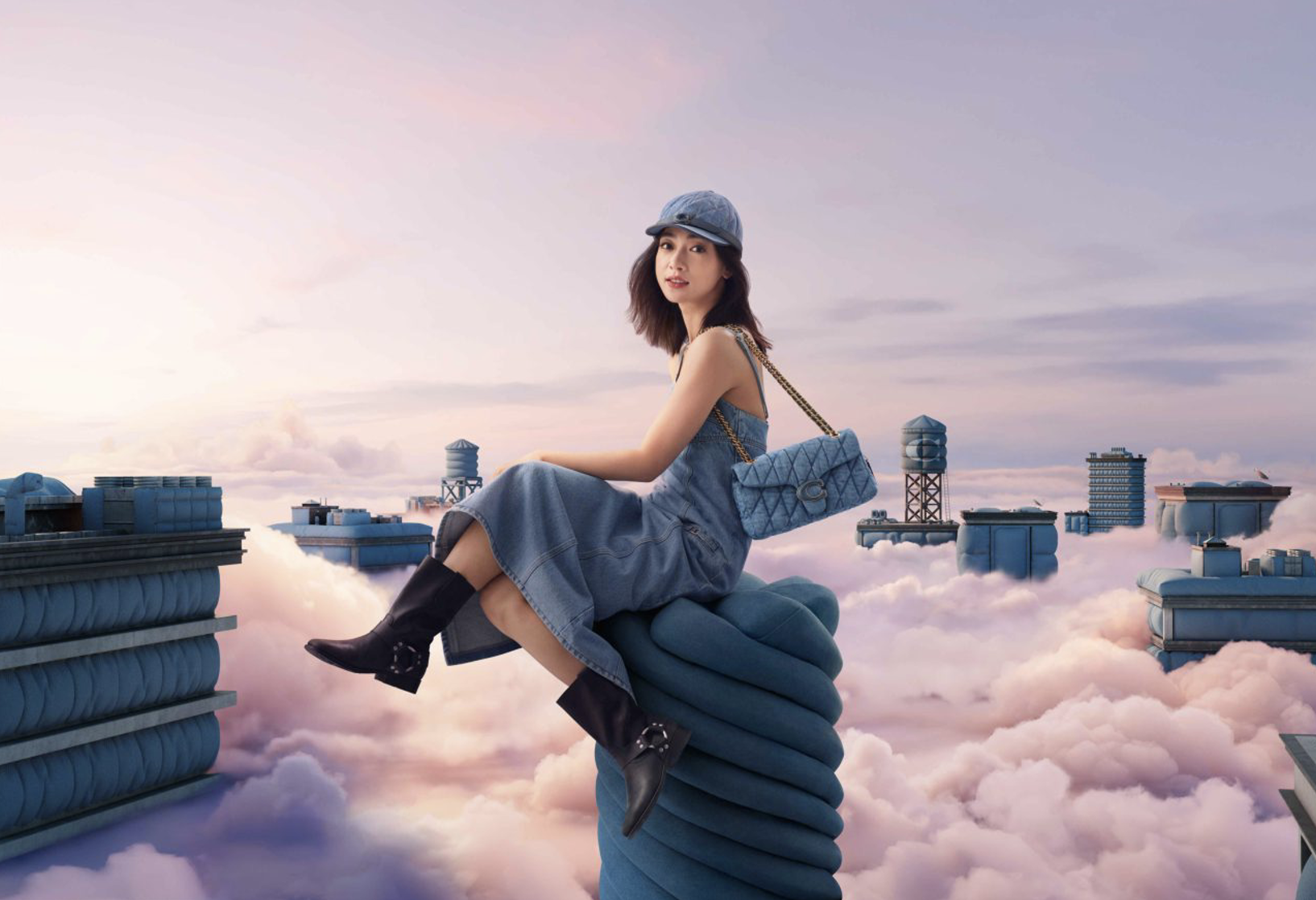
This dynamic is already manifesting in divergent brand performance. According to Tapestry’s fiscal Q4 2025 earnings, Coach achieved 18% growth in Greater China – significantly outpacing the broader market by targeting consumers seeking “accessible luxury” with design-forward products at compelling price points.
Chinese actress Wu Jinyan in Coach’s Campaign Credit: Coach
The clarity this mature market provides cannot be understated. During periods of rapid expansion, even poorly managed brands could show impressive growth figures by simply opening stores in new cities or launching e-commerce operations. Now, operational excellence and genuine consumer appeal determine winners from losers – a transparency that many luxury brands will have to confront.
“For a long time, the luxury industry has recruited as if it were a private members club,” Roizen notes, highlighting how this new environment demands different capabilities. “We’re entering a phase where you’re seeing more and more luxury brands branch outside of the luxury ecosystem to bring talent.”
The appointment of executives with backgrounds outside traditional luxury—such as Leena Nair at Chanel, who spent 30 years in human resources at Unilever before becoming CEO – exemplifies this shift towards prioritising operational expertise and fresh perspectives over industry pedigree.
The Pursuit of Innovation and Optimisation
In this mature market, innovation and optimisation have become the primary battleground for competitive advantage – a reality that luxury brands, accustomed to relying on heritage and controlled scarcity, must urgently embrace.
“I think optimisation is looking at all your existing processes and finding ways to drive more value to the consumer or improve your financial equation,” Roizen explains. “It is just a sign of where many luxury brands have not had to focus on optimization because their growth was the forgiver of any inefficiencies in the system.”
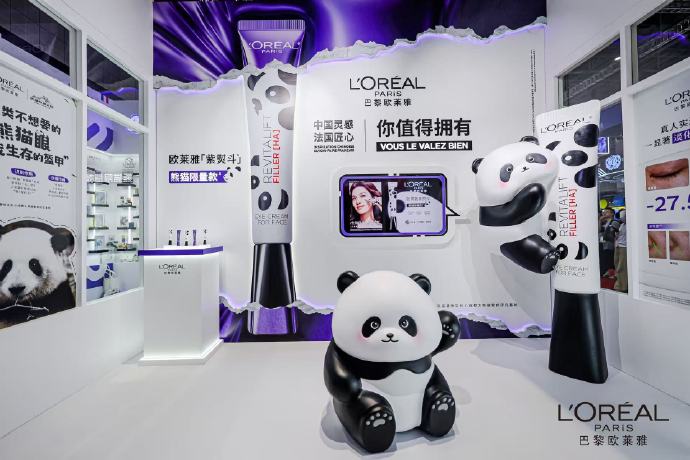
Roizen draws parallels to the beauty and cosmetics sector, which faced similar maturation several years earlier. The contrast between L’Oréal and Estée Lauder illuminates how different approaches yield dramatically different outcomes. L’Oréal has invested heavily in localised innovation for China, establishing its largest research and innovation centre outside France in Shanghai in 2005, and consistently adapting formulations for Chinese consumer preferences whilst maintaining aggressive digital optimisation. These efforts have helped L’Oréal maintain resilience in challenging markets – in 2023, whilst its broader North Asia region faced headwinds, mainland China operations still grew 5.4%, outperforming a flat local beauty market, according to the company’s annual report.
Estée Lauder, by contrast, has struggled with operational execution in China. The company reported a 17% decline in Asia-Pacific sales for its fiscal year 2024, with management citing difficulties adapting to rapidly shifting consumer behaviours and increased competition from domestic beauty brands. According to quarterly earnings calls, Estée Lauder acknowledged challenges in digital commerce optimisation and inventory management – precisely the operational deficiencies that Roizen identifies as fatal in mature markets.
“You’ve seen companies like L’Oréal outperform their industry through relentless investment in optimisation and innovation,” Roizen says. “For the luxury industry, this is a completely new paradigm where brands are gonna have to really focus on innovation and optimisation.”
This extends beyond product development to every operational aspect: retail experience, digital commerce, supply chain management, customer relationship management, and marketing effectiveness. “The work that my team and I do is focused on helping brands optimise their digital operations, and we see vast opportunities to generate significant performance improvement in relatively rapid periods of time,” says Roizen. This is largely in the form of operational optimisation – opportunities that have long existed but were masked by market growth, he adds
L’Oréal’s Panda Limited Edition Product for China Credit: L’Oréal
China as the Bellwether
What’s occurring in China offers a preview of luxury’s global future. As one of the world’s largest luxury markets matures, the competitive dynamics emerging there will inevitably spread to other regions. The golden age of luxury growth through geographic expansion has ended; and the era of competition through operational excellence has begun.
“Business rules and common sense are the same around the world when it comes to running a business,” Roizen concludes. “Two plus two equals four in every country, including China.”
For luxury brands, this maturation demands uncomfortable acknowledgment: sustainable success now requires the operational discipline, innovation commitment, and efficiency focus that other industries mastered decades ago. The question is no longer whether brands will adapt to this new paradigm, but whether they can adapt quickly enough to remain competitive in a market where growth no longer forgives operational mediocrity.
Subscribe to The Luxury Society Podcast to receive notifications about new episodes featuring luxury industry leaders. Never miss an episode as we continue exploring the themes shaping the future of luxury.
Lydianne is a seasoned marketing and communications professional with over a decade of experience in the luxury industry. Having spent six years in Shanghai, she also has a deep understanding of China’s evolving luxury landscape. Currently Global Marketing & Communications Director at DLG, she previously led marketing efforts for DLG China. Before that, she honed her editorial expertise at Prestige in Singapore and later as China Editor of Luxury Society.
The newly released WeChat Luxury Index examines how high-end and luxury brands achieve marketing or business objectives on WeChat. The report also showcases a ranking of these brands, evaluating whether their offerings and services on WeChat are developed enough to meet the sophisticated demands of today’s consumers.
In an exclusive interview for The Luxury Society Podcast’s inaugural episode, TAG Heuer CEO Antoine Pin reveals how the brand’s historic return to Formula 1 aims to conquer new markets, seduce younger consumers, and win the ultimate battle: The one for our wrists.
The traditional pillars of luxury – rarity, exclusivity, and artisanal craft are giving way to a new currency. For decades, the industry was defined by the tangible: the precise stitch, the rare skin, the silent atelier. That is no longer enough. As houses such as Louis Vuitton and Dior demonstrate, the industry has shifted from selling objects to brokering cultural capital, and for the modern consumer, luxury is less defined by what one possesses than by the cultural space one inhabits.
High net worth Generation Z consumers are influencing luxury brand strategies today, not tomorrow. New research reveals why the industry can no longer defer engagement with the children of affluent families.
“Luxury in India was never just worn – it was lived.” India’s luxury landscape extends far beyond fashion and accessories. From heritage hospitality to wellness rituals and artisanal craft, the country’s affluent consumers have long embraced a holistic interpretation of prestige that global brands are only beginning to understand.